

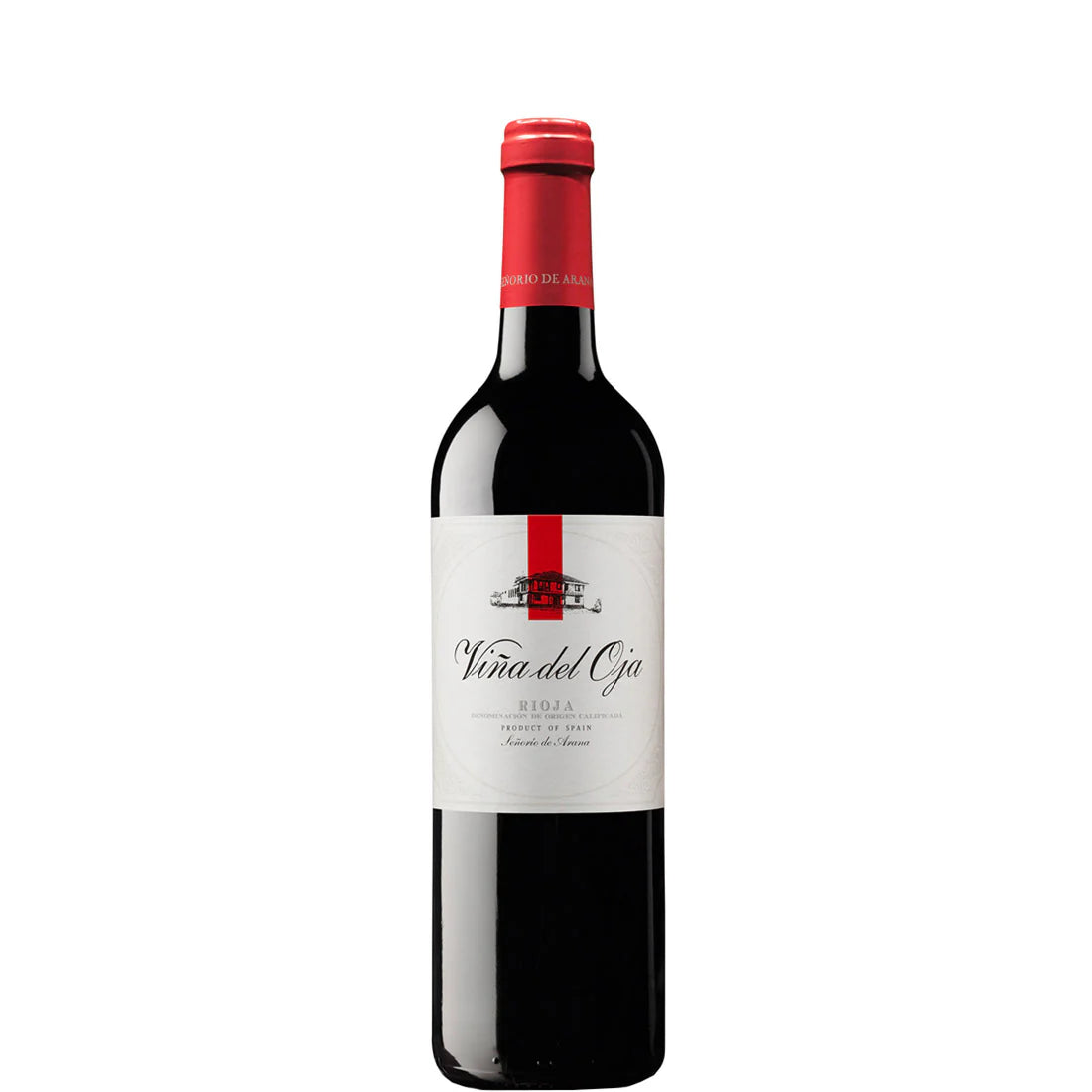
Bodegas Señorío de Arana, Viña del Oja Rioja Tinto, 2023
Bodegas Señorío de Arana, Viña del Oja Rioja Tinto, 2023
- Red Still
- 75CL
- 13.5%
- Tempranillo
Couldn't load pickup availability
The 2023 Viña del Oja Rioja Tinto is a fresh and fruit-forward young Rioja made from 100% Tempranillo. It displays a deep cherry-red color with purple hues and opens with bright aromas of red berries, plum, and a hint of spice. On the palate, it is smooth and juicy, with soft tannins and lively acidity that give it an easy-drinking, approachable character.
The finish is clean, making it an ideal everyday red for casual meals or light fare.
Bodegas Señorío de Arana is a family-owned estate based in Rioja Alavesa, known for its dedication to quality across traditional and modern styles. The Viña del Oja range represents their fresh, youthful side, crafted without oak to emphasize the natural fruit expression of Tempranillo. Grapes are sourced from estate vineyards with calcareous and silty soils, and the winemaking focuses on preserving varietal purity. This wine is an excellent introduction to Rioja’s lighter, more immediate style.
This wine is crafted for immediate enjoyment and will be at its peak from now until 2028. The primary red berry fruit will remain dominant throughout its drinking window, with the fresh acidity gradually softening. As a young, unoaked style, it won't develop significant secondary complexity but may gain slight integration between fruit and tannins over the next year. Beyond 2028, the vibrant fruit character that defines this wine will begin to fade, making earlier consumption advisable.
Tasting Notes
AppearanceDeep cherry-red with vibrant purple hues that reflect its youth and vitality.
NoseBright aromas of red berries dominate, particularly raspberry and cranberry, alongside darker plum fruit. A gentle spice element adds complexity without overwhelming the clean fruit expression. The absence of oak allows the pure Tempranillo character to shine through.
PalateSmooth and juicy on entry with soft, approachable tannins that provide structure without weight. Lively acidity keeps the wine fresh and food-friendly, whilst the fruit flavours mirror the nose with added depth. The medium body makes this immediately appealing and easy-drinking.
FinishClean and refreshing with lingering red berry fruit and a subtle mineral note.
Overall impressionAn excellent introduction to Rioja's lighter, more immediate style that prioritises fruit purity and drinkability.
Food Pairings
In Rioja, young reds like this are the natural partner for pintxos - small plates of jamón ibérico, Manchego cheese, and roasted red peppers drizzled with olive oil. Local specialities include cordero al chilindrón (lamb stewed with peppers and tomatoes) and patatas a la riojana (potatoes braised with chorizo and paprika). The wine's fresh acidity and soft tannins make it ideal for the region's grilled vegetables, particularly pimientos de padrón and escalivada. Riojans also enjoy these wines with simple grilled meats and the local white beans cooked with morcilla.
We think this wine would go well with
Serve lightly chilled at 14-16°C to emphasise the fresh fruit character and natural acidity. No decanting is necessary as the wine is designed for immediate consumption. Use a medium-sized red wine glass to concentrate the bright berry aromas without overwhelming the delicate structure. This style benefits from being opened just before serving to preserve its youthful vibrancy.
The estate vineyards sit on calcareous and silty soils typical of Rioja Alavesa, which provide excellent drainage whilst retaining enough moisture for consistent ripening. These limestone-rich soils contribute to the wine's fresh acidity and mineral backbone. The climate here is influenced by both Atlantic and Mediterranean systems, creating ideal conditions for Tempranillo to develop bright fruit character whilst maintaining natural freshness.
Rioja is Spain's most prestigious wine region, governed by strict regulations that classify wines by ageing requirements from young Joven wines through to Gran Reserva. The region is divided into three sub-zones, with Rioja Alavesa known for producing the most elegant and aromatic wines due to its higher altitude and limestone soils. Unlike neighbouring Rioja Alta and Rioja Oriental, Alavesa specialises in fresh, fruit-forward expressions of Tempranillo that balance power with finesse.
The 2023 growing season in Rioja proved relatively straightforward after the challenges of recent years, with spring arriving punctually and flowering proceeding without major disruption. Summer brought warm, dry conditions that allowed the vines to develop steadily, though occasional rainfall helped prevent excessive stress. The harvest began in mid-September under favourable conditions, with producers able to pick at optimal ripeness levels. While not without its complexities, 2023 avoided the extreme weather events that have marked several recent vintages.
Early tastings suggest 2023 has produced wines of good quality across the region, with Tempranillo showing particular promise in terms of colour intensity and structured tannins. The vintage appears to favour a classic Rioja profile rather than the riper, more concentrated style seen in warmer years. Garnacha and other indigenous varieties have also performed well, contributing freshness and complexity to blends. These wines will benefit from three to five years of cellaring before reaching their drinking window, though the lighter styles may offer early pleasure from 2025 onwards.
FAQs
Why is this Rioja so different from the traditional oaked styles?
This represents the modern joven (young) style of Rioja, made without oak ageing to showcase pure Tempranillo fruit. Traditional Rioja gains complexity from American oak barrels, but this approach highlights the grape's natural berry character and makes the wine immediately approachable.
How long can I keep this wine?
This is designed for drinking within 2-3 years of vintage. Unlike Rioja Reserva or Gran Reserva, young Riojas don't improve with extended cellaring - their appeal lies in fresh fruit character that will diminish over time.
What's the difference between Rioja Alavesa and other Rioja sub-regions?
Rioja Alavesa produces the most elegant wines due to limestone-rich soils and higher altitude. Compared to Rioja Alta's structured reds or Rioja Oriental's powerful styles, Alavesa specialises in aromatic, fruit-forward wines with natural freshness.
Should I decant this wine?
No decanting needed. This style is crafted for immediate enjoyment with soft tannins and bright fruit that doesn't require aeration. Simply open and pour to preserve the wine's youthful vibrancy.
Is this wine suitable for vegetarians?
Most modern Spanish wines use vegetarian-friendly fining agents, though specific practices vary by producer. Contact the retailer for confirmation of the exact fining methods used in this vintage.
What temperature should I serve this at?
Serve lightly chilled at 14-16°C. This cooler temperature enhances the fresh acidity and bright berry fruit whilst preventing any alcohol warmth from dominating the delicate structure.
-
Free UK Delivery
Learn about deliveryGet free UK delivery when you spend £75 or more on duty paid wine
-
Save 30% on a host of quality wines
Our fine wines are sourced from our sister retailers, but offered at a substantial discount to their previous selling prices.