
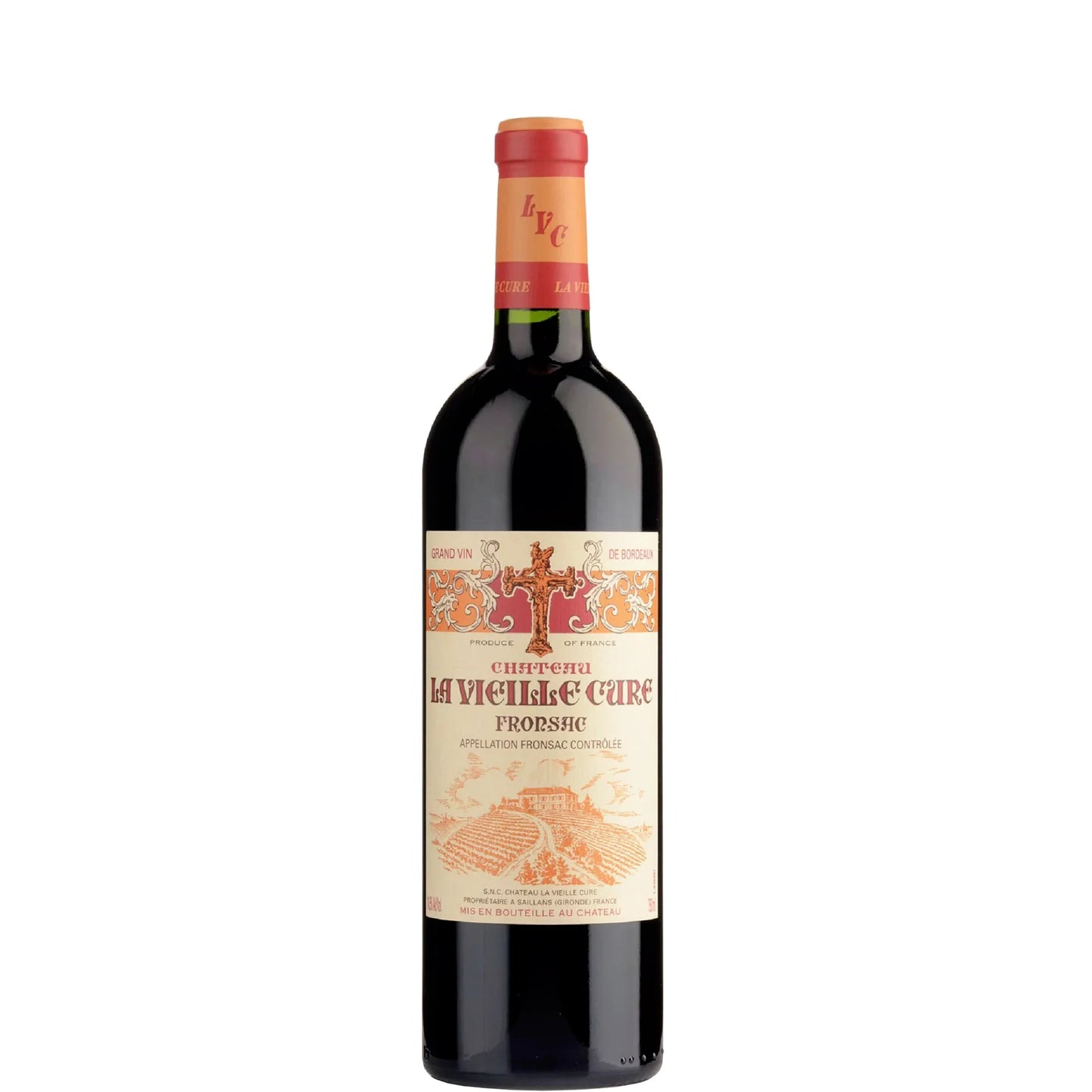
Château La Vieille Cure, 2013
Château La Vieille Cure, 2013
- Red Still
- 75CL
- 13.5%
- Merlot, Cabernet Franc, Cabernet Sauvignon
Couldn't load pickup availability
The 2013 Château La Vieille Cure is a polished Bordeaux blend dominated by Merlot with Cabernet Franc and a touch of Cabernet Sauvignon. It shows a deep ruby color with aromas of ripe blackberries, plums, and subtle hints of tobacco and graphite. On the palate, the wine is medium to full-bodied with well-integrated tannins, balanced acidity, and a smooth, lingering finish. The vintage is noted for its elegance and approachable style.
Château La Vieille Cure is a respected estate in the Fronsac appellation, with vineyards favourably situated along the Isle River. Since its acquisition in the mid-1980s, the property has undergone improvements to enhance quality.
Their 2013 vintage has moved through its primary fruit phase and is showing well-integrated secondary characteristics. The tannins have softened considerably and the wine is drinking beautifully now, with tobacco and earth complementing the remaining dark fruit. Over the next 3-5 years, expect further integration and the development of more savoury, tertiary flavours whilst the fruit gradually fades. The wine will remain pleasant but is unlikely to improve significantly beyond 2030, making now an ideal time to enjoy its current harmony.
Tasting Notes
AppearanceDeep ruby colour with garnet edges showing early maturity.
NoseRipe blackberry and dark plum dominate, supported by subtle tobacco and graphite minerality. There's an underlying earthiness that speaks to the Fronsac terroir, with cedar and dried herb developing as the wine opens.
PalateMedium to full-bodied with well-integrated tannins that provide structure without overwhelming the fruit. The Merlot brings plush berry flavours whilst Cabernet Franc adds spice and freshness. Balanced acidity keeps the wine lively and food-friendly.
FinishSmooth and lingering with gentle tannins and persistent dark fruit.
Overall impressionAn elegant, approachable Bordeaux that captures the essence of Right Bank winemaking with refinement and balance.
Food Pairings
In Bordeaux, wines like this pair naturally with the region's classic dishes such as entrecôte à la bordelaise, where the wine's tannins complement the rich beef and shallot sauce. Duck confit with garlic and herbs is another traditional match, as the wine's acidity cuts through the richness whilst its earthy character echoes the rustic preparation. Local cheeses like aged Comté or the regional Cabécou work beautifully, whilst the wine also complements lamb dishes slow-cooked with thyme and root vegetables. The Bordelais often serve such wines with simple grilled meats enhanced by bone marrow and parsley.
We think this wine would go well with
Serve at 16-18°C to allow the fruit character to shine whilst maintaining structure. Decant for 30-60 minutes to encourage the wine to open and integrate, particularly if drinking now. Use large Bordeaux glasses to concentrate the aromatics and provide space for the wine to breathe. The wine benefits from brief aeration but doesn't require extended decanting given its current approachable state.
The vineyards are favourably positioned along the Isle River in Fronsac, benefiting from clay-limestone soils that retain moisture and provide mineral structure. The proximity to the river creates a moderating microclimate that helps ripen Merlot effectively whilst maintaining freshness. These soils, combined with gentle slopes and good drainage, produce wines with depth and natural balance, allowing the Merlot to develop rich fruit character whilst the Cabernet varieties add structure and longevity.
Fronsac sits on the Right Bank of the Dordogne, neighbouring Pomerol and Saint-Émilion. The appellation requires minimum 70% Merlot and Cabernet Franc combined, with Cabernet Sauvignon and Malbec permitted as supporting varieties. Fronsac wines traditionally offer excellent value compared to their prestigious neighbours, delivering similar Merlot-driven character with good ageing potential. The appellation's clay-limestone soils and maritime influence create wines that are typically more structured than Pomerol yet more accessible than Saint-Émilion.
The 2013 growing season in Bordeaux proved challenging from the outset, with a cold, wet spring delaying flowering and reducing potential yields. Summer brought little respite, remaining cool and damp with insufficient sunshine to fully ripen the grapes. September's weather improved slightly, but many estates faced difficult decisions about harvest timing, balancing the need for further ripening against the risk of autumn rains. Those producers who waited for optimal conditions and employed rigorous selection often salvaged respectable wines, though the vintage demanded considerable skill in both vineyard and cellar.
This remains one of Bordeaux's more modest recent vintages, with Merlot generally outperforming Cabernet Sauvignon in the cooler conditions. The Right Bank estates, particularly those with well-drained soils and experienced winemaking teams, produced the vintage's most successful wines, though even these lack the concentration and ageing potential of great years. Most 2013 Bordeaux wines are drinking well now, offering approachable fruit and softer tannins than typical. While unlikely to develop the complexity of superior vintages, the better examples provide pleasant drinking over the next five to eight years rather than requiring extended cellaring.
FAQs
Is 2013 Château La Vieille Cure ready to drink now?
Yes, this wine is drinking beautifully now. At thirteen years old, the tannins have softened and the wine shows excellent integration between fruit and secondary characteristics.
How long will this wine keep?
The wine will remain enjoyable until around 2032, though it's at its peak now. It's best consumed within the next 6 years whilst the fruit and structure remain in balance.
What makes Fronsac different from other Bordeaux appellations?
Fronsac offers excellent value compared to neighbouring Pomerol and Saint-Émilion, producing Merlot-dominant wines with similar character but at more accessible prices. The clay-limestone soils create structured yet approachable wines.
Should I decant this wine?
Yes, decant for 30-60 minutes to allow the wine to open and show its full character. The wine benefits from aeration but doesn't require extended decanting given its current maturity.
What food pairs best with this style of wine?
Classic matches include roast lamb, grilled steak, and duck confit. The wine's medium-full body and integrated tannins complement rich meats whilst its acidity prevents the pairing from becoming heavy.
How does the 2013 vintage rate for Bordeaux?
2013 was a challenging vintage in Bordeaux but produced elegant, food-friendly wines for estates that managed their vineyards well. The wines show more restraint than powerful years but offer excellent drinkability and charm.
-
Free UK Delivery
Learn about deliveryGet free UK delivery when you spend £75 or more on duty paid wine
-
Save 30% on a host of quality wines
Our fine wines are sourced from our sister retailers, but offered at a substantial discount to their previous selling prices.