
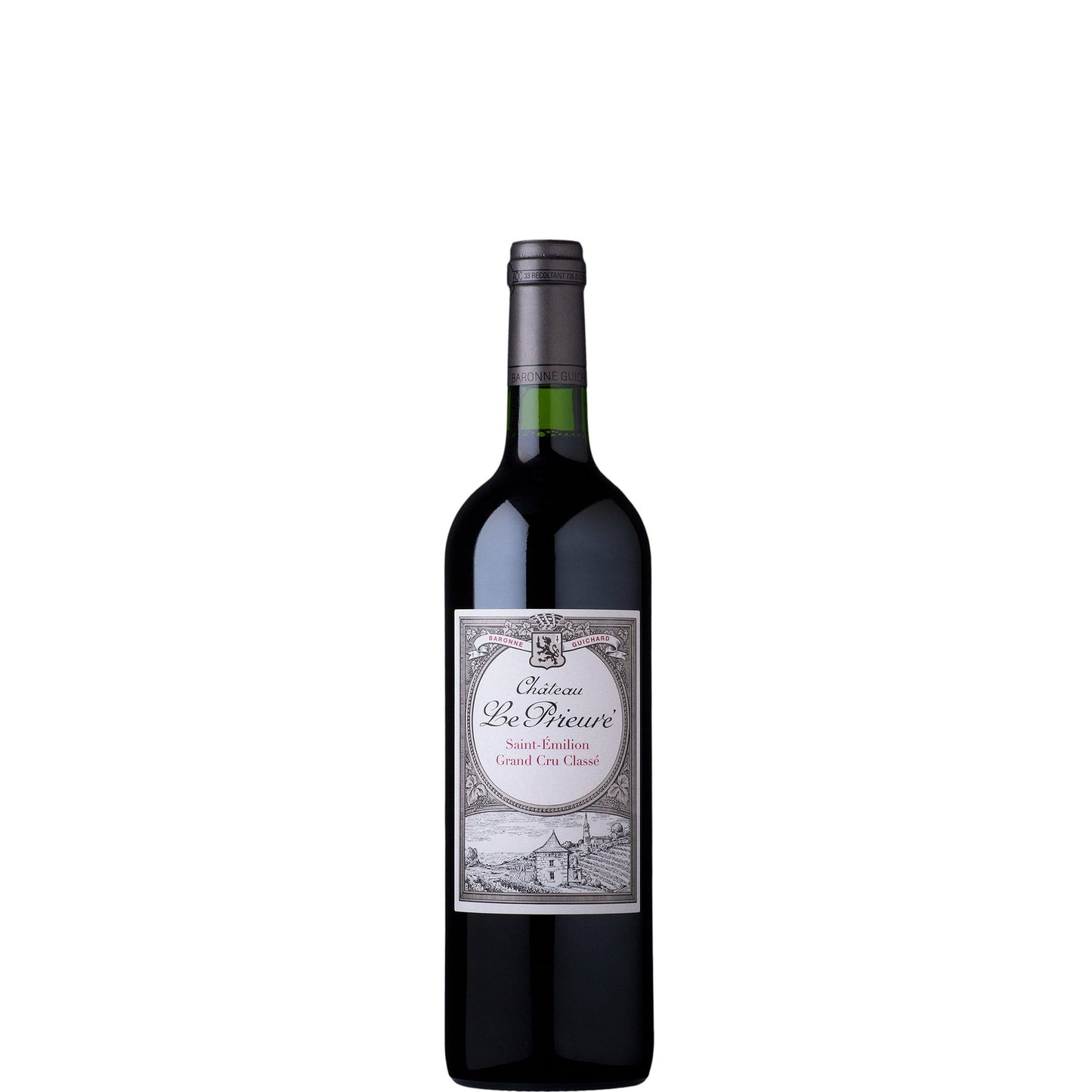
Château Le Prieure, 2014 - Half-bottle
Château Le Prieure, 2014 - Half-bottle
- Red Still
- 37.5CL
- 14%
- Merlot, Cabernet Franc, Cabernet Sauvignon
Couldn't load pickup availability
A classic year marked by a cool summer and a sunny harvest, the Château Le Prieuré 2014 displays a deep garnet hue with a touch of ruby at the rim. The nose is elegantly expressive, offering a bouquet of red currant, raspberry, and plum, underpinned by notes of crushed violets, graphite, and subtle cedar. On the palate, it strikes a beautiful balance between structure and finesse: medium-bodied, with silky tannins and a vibrant acidity that carries the wine through. Layers of fresh cherry, earthy spice, and a hint of mocha unfold gradually, while the finish lingers with minerality and grace.
Château Le Prieuré is a historic Grand Cru Classé estate located on the prestigious limestone plateau of Saint-Émilion, adjacent to celebrated neighbours like Château Canon and Clos Fourtet. With origins tracing back to a 17th-century Carmelite priory, the property has long embodied the harmony between tradition and terroir. Since being acquired by the owners of Château Bélair-Monange and Château Moulin Saint-Georges.
The 2014 vintage's natural acidity and moderate alcohol will ensure graceful development over the coming decade. Primary red fruit flavours will gradually integrate with secondary complexity emerging around 2028-2030, when earthy, leather and tobacco character will complement the existing fruit. The wine should reach full maturity by 2032, maintaining its elegance whilst developing the classic Saint-Émilion tertiary aromatics of forest floor, dried herbs and minerals. Plateau drinking will continue until 2040, after which the fruit may begin to fade whilst retaining structural integrity.
Tasting Notes
AppearanceDeep garnet with ruby highlights at the rim, showing good concentration and youthful vitality.
NoseElegantly expressive aromatics of red currant, raspberry and plum provide the fruit foundation. Floral violet accents lift the nose whilst graphite minerality and subtle cedar add complexity from careful oak integration.
PalateMedium-bodied with exemplary balance between structure and finesse, supported by silky tannins and vibrant acidity. Layers unfold gradually revealing fresh cherry, earthy spice and mocha depth, demonstrating the wine's classical Saint-Émilion character.
FinishLingering minerality and grace carry the flavours through to a persistent, elegant conclusion.
Overall impressionA beautifully balanced Saint-Émilion that captures both the freshness of the cool 2014 vintage and the terroir's limestone-driven elegance.
Food Pairings
In Saint-Émilion, this style of wine traditionally accompanies the hearty cuisine of southwest France, particularly slow-cooked dishes that complement Merlot's supple tannins. Local specialities include entrecôte à la Bordelaise with shallots and red wine reduction, or confit de canard with roasted garlic and thyme. The wine's earthy minerality pairs beautifully with wild mushroom dishes like cèpes à la Bordelaise, whilst its balanced acidity cuts through rich dishes such as cassoulet or lamb slow-braised with herbs de Provence. The elegant structure also suits the region's aged cheeses, particularly Roquefort and aged Comté.
We think this wine would go well with
Serve at 16-18°C to allow the wine's aromatics and tannin structure to express fully. Decant for 30-45 minutes to soften the tannins and integrate the oak, though this is optional given the wine's current approachability. Use large Burgundy glasses to concentrate the aromatics whilst providing sufficient bowl space for swirling. The half-bottle format makes this ideal for intimate dinners or when you want to enjoy fine Bordeaux without committing to a full bottle.
The vineyard sits on Saint-Émilion's coveted limestone plateau, where shallow soils over bedrock limestone provide excellent drainage and mineral complexity. This elevated position ensures optimal sun exposure whilst the limestone subsoil regulates water supply during dry periods. The combination of clay-limestone topsoil and deep limestone bedrock creates the ideal conditions for Merlot and Cabernet Franc, producing wines with both power and elegance typical of the plateau's finest sites.
Saint-Émilion Grand Cru represents the pinnacle of Right Bank Bordeaux, where Merlot-based blends reach their finest expression on limestone and clay soils. The appellation demands lower yields and stricter quality controls than basic Saint-Émilion, with wines showing greater concentration and ageing potential. Unlike the Médoc's Cabernet Sauvignon dominance, Saint-Émilion's limestone plateau favours Merlot and Cabernet Franc, creating wines with earlier accessibility but impressive longevity. The classification system, unique in Bordeaux, is reviewed every ten years, maintaining competitive standards among producers.
The 2014 Bordeaux vintage began promisingly with a mild winter and early budbreak, but faced significant challenges through a cool, wet spring that delayed flowering. Summer brought mixed conditions with periods of heat followed by concerning rainfall in August, creating anxiety about potential rot and dilution. However, a crucial dry spell in September allowed conscientious producers to wait for optimal ripeness, with the best estates harvesting late under favourable conditions. The vintage demanded careful selection in both vineyard and winery, separating the dedicated from the casual.
Those who exercised patience were rewarded with wines of considerable elegance rather than power. Merlot performed particularly well on the Right Bank, producing wines with lovely fruit concentration and silky tannins, whilst Cabernet Sauvignon struggled more in certain Left Bank appellations. The finest 2014s display classic Bordeaux character with good acidity, refined structure, and appealing aromatics, though they lack the density of truly great years. Most are drinking beautifully now, having reached an attractive early plateau, with the best examples continuing to develop gracefully through the late 2020s.
FAQs
Why choose a half-bottle over a full bottle?
Half-bottles are perfect for intimate dinners, tasting mature vintages without waste, or when you want to enjoy fine wine with lighter meals. They also age slightly faster than full bottles due to the higher ratio of oxygen to wine, making them ready to drink sooner.
How does the 2014 vintage compare to other Saint-Émilion years?
2014 was marked by a cool summer and sunny harvest, producing wines with excellent freshness and balance. Whilst not as powerful as 2010 or 2009, the vintage offers classic Saint-Émilion elegance with good ageing potential and earlier approachability than the more structured years.
What makes Château Le Prieuré distinctive among Saint-Émilion properties?
Its location on the limestone plateau adjacent to Canon and Clos Fourtet places it among the appellation's elite terroirs. The historic connection to a 17th-century priory and current ownership alongside Bélair-Monange ensures traditional winemaking with modern precision.
When should I drink this wine for optimal enjoyment?
The wine is drinking beautifully now through 2040. For those preferring youthful fruit character, enjoy until 2030. For lovers of mature Bordeaux complexity, the sweet spot will be 2030-2035 when tertiary aromatics fully develop.
How should I store this half-bottle?
Store horizontally in a cool, dark place at 12-15°C with consistent temperature and humidity around 70%. Half-bottles are more susceptible to temperature fluctuations, so stable conditions are particularly important for optimal ageing.
What food pairings work best with this wine's style?
The wine's medium body and silky tannins suit roasted meats, particularly lamb and duck. The limestone minerality complements mushroom dishes, whilst the balanced acidity works well with herb-crusted preparations and medium-aged cheeses.
-
Free UK Delivery
Learn about deliveryGet free UK delivery when you spend £75 or more on duty paid wine
-
Save 30% on a host of quality wines
Our fine wines are sourced from our sister retailers, but offered at a substantial discount to their previous selling prices.