

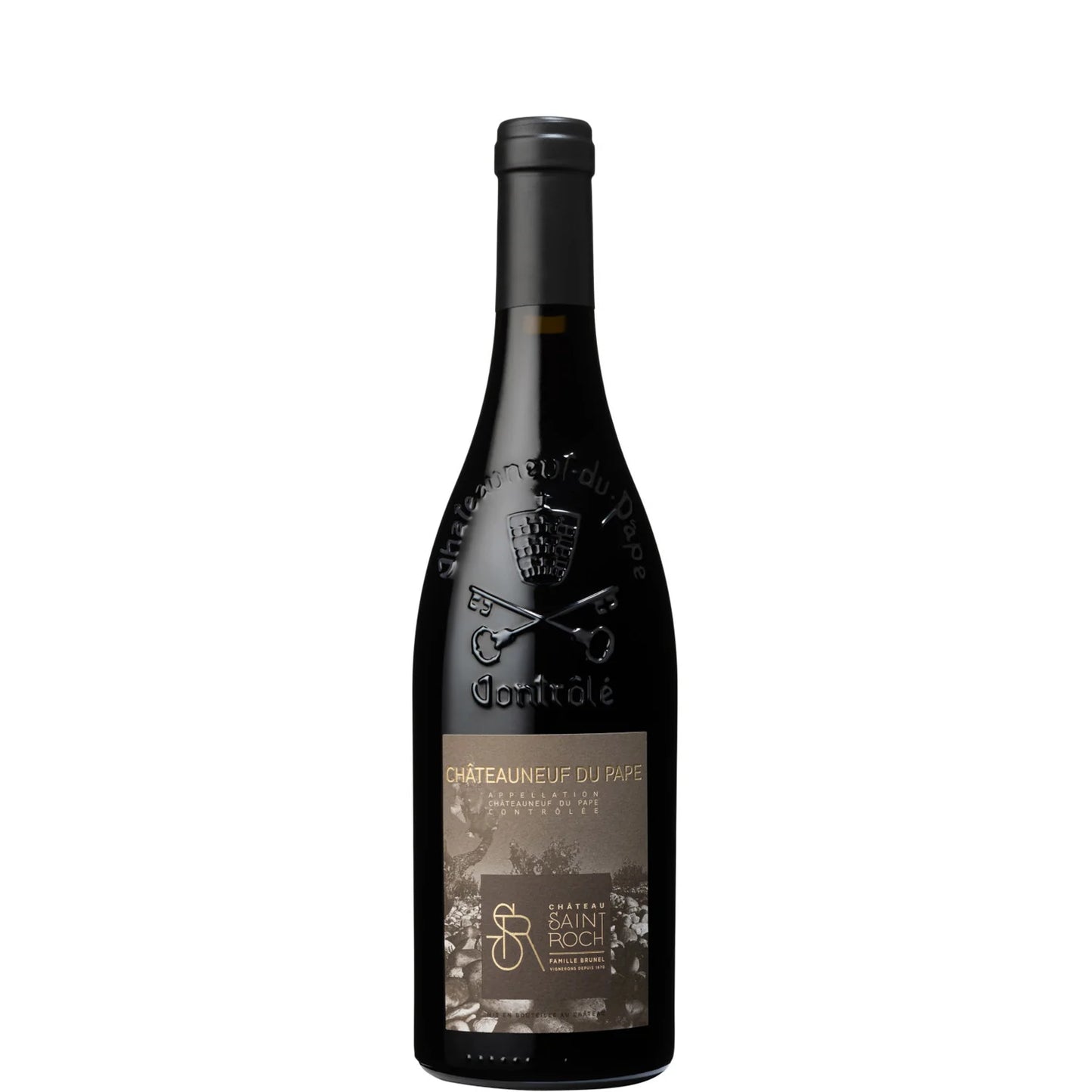
Château Saint-Roch, Châteauneuf Du Pape Rouge, 2022
Château Saint-Roch, Châteauneuf Du Pape Rouge, 2022
- Red Still
- 75CL
- 14.5%
- Grenache, Syrah, Mourvèdre
Couldn't load pickup availability
The 2022 Châteauneuf-du-Pape Rouge from Château Saint-Roch is a bold and expressive Southern Rhône red, offering a deep ruby color and rich aromas of black cherry, plum, garrigue, and cracked pepper. On the palate, it’s full-bodied and generous, with ripe dark fruit, warm spice, and earthy undertones. The tannins are smooth yet structured, and the finish is long and savoury, showcasing the wine’s depth and regional character.
Produced from a classic blend of Grenache, Syrah, and Mourvèdre, sourced from old vines rooted in the stony soils of Châteauneuf-du-Pape, this wine reflects both power and finesse. Château Saint-Roch, guided by the Brunel family, focuses on minimal oak influence to preserve the purity of fruit and the identity of the terroir.
Currently in its primary fruit phase, the 2022 vintage displays generous dark berry character that will gradually integrate over the next two years. By 2028-2030, expect secondary development as leather, tobacco, and sous-bois earthiness emerge to complement the fruit core. The wine should reach its optimal drinking window between 2030-2032, when primary and secondary flavours achieve perfect balance. Given the vintage's structure and the estate's traditional approach, graceful decline won't begin until the mid-2030s, making this a wine for medium-term cellaring rather than extended ageing.
Tasting Notes
AppearanceDeep ruby with purple highlights, showing the wine's youthful vigour.
NoseRipe blackberry and plum dominate, lifted by classic garrigue aromatics of wild thyme and lavender. Cracked black pepper adds spice, whilst underlying earthiness speaks to the terroir's influence. The bouquet opens gradually, revealing layers of dark fruit concentration.
PalateFull-bodied and generous, with dark cherry and blackberry fruit supported by warm Mediterranean spicing. The tannins provide structure without overwhelming, whilst earthy mineral undertones ground the wine's exuberance. Balanced acidity maintains freshness despite the wine's natural power and concentration.
FinishLong and savoury, with lingering spice and earth that epitomise Southern Rhône character.
Overall impressionA classic expression of modern Châteauneuf-du-Pape that balances immediate appeal with cellar-worthy structure.
Food Pairings
In the Southern Rhône, this style of wine traditionally accompanies the robust cuisine of Provence and the Languedoc. Local favourites include daube de bœuf - slow-braised beef with herbs de Provence, carrots, and olives, or gigot d'agneau aux herbes, roast leg of lamb studded with garlic and wild herbs. The wine pairs beautifully with ratatouille enriched with local olive oil, or the region's famous tapenade served with crusty bread. Wild boar stew, sanglier aux olives, represents the perfect marriage of local game with the wine's earthy, spiced character. Aged cheeses from the region, particularly Banon wrapped in chestnut leaves, provide an ideal conclusion to any Southern Rhône meal.
We think this wine would go well with
Serve at 16-18°C to allow the wine's complexity to fully express itself. Decant for 30-45 minutes to soften the tannins and integrate the fruit with its earthy undertones. Use large Burgundy glasses rather than Bordeaux stems - the wider bowl better captures the wine's aromatic intensity and allows the blend's various components to harmonise. Young bottles benefit most from decanting, whilst those approaching maturity may only need gentle breathing time.
The vineyards sit on the famous galets roulés - large rounded stones that define Châteauneuf-du-Pape's landscape. These heat-retaining stones, deposited by ancient glacial floods, warm the vines during cool nights and reflect sunlight back to the grapes during the day. Beneath lies a complex mix of clay, limestone, and sand that provides excellent drainage whilst retaining enough moisture for the old vines to develop concentrated fruit. This combination of stone coverage and varied subsoils creates the ideal conditions for the late-ripening varieties to achieve full phenolic maturity whilst maintaining freshness.
Châteauneuf-du-Pape stands as the Southern Rhône's most prestigious appellation, established in 1936 with strict regulations governing 13 permitted grape varieties. The appellation mandates minimum alcohol levels of 12.5% and restricts yields to ensure concentration, though most producers achieve significantly higher alcohol naturally. Unlike its Northern Rhône counterparts where Syrah dominates single-variety wines, Châteauneuf-du-Pape celebrates the art of blending, with Grenache typically forming the backbone. The appellation's 3,200 hectares produce wines of remarkable diversity, from elegant and perfumed styles to powerhouse reds that can age for decades.
The 2022 Rhône vintage began with a dry winter followed by an exceptionally hot, drought-stricken summer that tested even the region's heat-loving varieties. Water stress became severe across both northern and southern appellations, with some producers reporting the earliest harvest dates on record. The extreme conditions favoured old-vine sites with deep root systems, whilst younger plantings struggled. Careful vineyard management and selective harvesting proved crucial, as grape concentration reached intense levels with naturally low yields.
Despite the challenging conditions, 2022 produced wines of remarkable intensity and structure. Syrah in the north shows exceptional depth and spice, though alcohol levels ran high. Grenache thrived in the southern Rhône, delivering powerful, concentrated reds with impressive colour saturation. The vintage favours producers who picked early to preserve freshness and employed judicious cellar techniques. These are structured wines built for the long term – the finest northern Rhônes will benefit from five to seven years of cellaring before showing their best, whilst the southern appellations are more approachable now but will reward patience through the 2030s.
FAQs
How long should I cellar this Châteauneuf-du-Pape?
The 2022 vintage will develop beautifully until 2034. It's approachable now but will show greater complexity and integration from 2030 onwards when secondary flavours emerge.
What makes Château Saint-Roch different from other Châteauneuf-du-Pape producers?
The Brunel family's minimal oak approach preserves the purity of fruit and terroir expression. Their focus on old vine fruit and restrained winemaking creates wines that emphasise regional character over modern extraction techniques.
Is this wine ready to drink now or should I wait?
The wine is approachable now with 30-45 minutes of decanting. However, patience will be rewarded - the wine will show significantly more complexity and integration from 2028 onwards.
What food pairings work best with this style?
Classic matches include roast lamb with herbs, beef daube, or wild game. The wine's earthy spice also complements strong cheeses and robust vegetable dishes like ratatouille.
How does the 2022 vintage compare to previous years?
2022 was a warm, dry vintage that produced concentrated wines with good natural acidity. The wines show more immediate appeal than cooler years but retain the structure for proper cellaring.
What's the significance of the galets roulés terroir?
These large stones retain heat during the day and release it at night, ensuring complete ripening of late-maturing varieties. They also provide excellent drainage whilst the varied soils underneath add mineral complexity to the wine.
-
Free UK Delivery
Learn about deliveryGet free UK delivery when you spend £75 or more on duty paid wine
-
Save 30% on a host of quality wines
Our fine wines are sourced from our sister retailers, but offered at a substantial discount to their previous selling prices.