
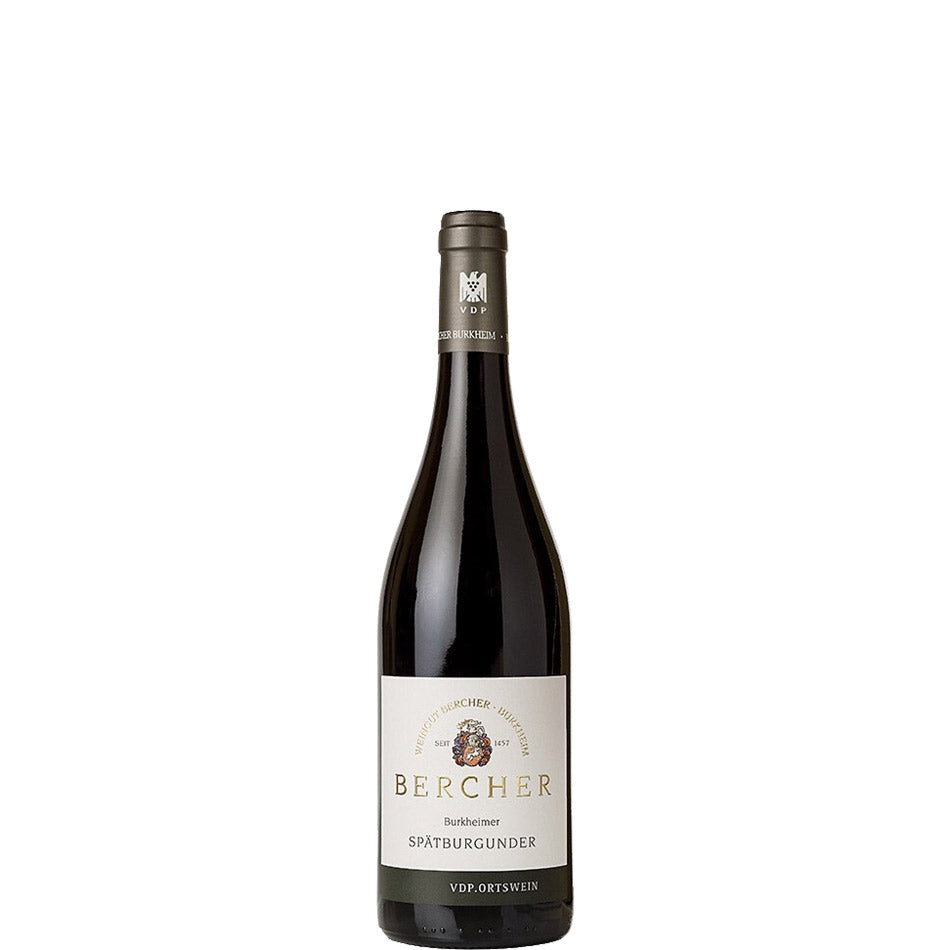
Bercher, Burkheimer Spätburgunder Village, 2017 - Half-bottle
Bercher, Burkheimer Spätburgunder Village, 2017 - Half-bottle
- Red Still
- 37.5CL
- 13%
- Spätburgunder
Couldn't load pickup availability
Weingut Bercher is a family owned and operated winery whose family crest dates back to 1457. Based in the Kaiserstuhl village of Burkheim, all the way down in the South of the Baden, the family looks back over 10 generations of wine making.
The winery was built in 1756 by Franz Michael Bercher. Being one of the leading vintners of the area, Bercher carefully maintains the highest quality standards and produces wines with a noticeable volcanic soil imprint.
The estate holds parcels in both of Burkheim’s VDP.Erste Lage (Premier Cru) Feuerberg and Schlossgarten as well as the VDP. Grosse Lage (Grand Cru) Feuerberg Haslen, Feuerberg Kesselberg and Schlossgarten Villinger. Located between the Rhine River and the Black Forest, Burkheim produces lush and mineralic wines that are ideal companions to a wide range of modern cuisine.
Bercher produces Spätburgunder (Pinot Noir), Weißburgunder (Pinot Blanc) and Grauburgunder (Pinot Gris). All the wines go through extended lees-aging and have a wonderful aging potential. Weingut Bercher is a member of the VDP.
The 2017 vintage has reached its first plateau of maturity, showing integrated fruit and well-settled tannins that make it highly approachable now. Primary red fruit will gradually develop secondary complexity over the next 2-3 years, with subtle game and forest floor characteristics emerging to complement the mineral backbone. The wine should hold this attractive middle phase until around 2030, when the fruit may begin to fade while mineral elements become more prominent. While capable of ageing until 2032, this village-level bottling is best enjoyed within the next five years.
Tasting Notes
AppearanceMedium ruby with brilliant clarity and youthful vibrancy at the rim.
NoseRed cherry and raspberry lead, supported by subtle volcanic minerality and a whisper of forest floor. The volcanic terroir expresses itself through precise mineral definition rather than overt earthiness. Extended lees contact adds gentle spice and textural complexity without masking the fruit.
PalateSilky and medium-bodied with elegant red fruit concentration and lively acidity. The volcanic backbone provides structure without heaviness, while subtle tannins frame rather than dominate. Clean mineral finish carries the fruit beautifully, with excellent balance between power and finesse typical of quality Baden Spätburgunder.
FinishLong and mineral-driven with persistent red fruit and a clean, saline conclusion.
Overall impressionClassic village-level Baden Spätburgunder that captures the volcanic elegance of Kaiserstuhl terroir with impressive purity and balance.
Food Pairings
Baden's position along the Rhine makes it Germany's most gastronomically diverse region, where Spätburgunder pairs naturally with the area's game-rich cuisine. Wild boar from the Black Forest, often prepared with juniper and local mushrooms, creates ideal partnerships with the wine's mineral structure and red fruit. The region's famous asparagus season sees white spears served with ham and hollandaise, a classic match for elegant Pinot Noir. Kaiserstuhl's volcanic soils also produce exceptional vegetables, particularly root vegetables roasted with herbs, which complement the wine's earthy minerality. Local charcuterie, including the region's renowned Schwarzwälder Schinken, provides another traditional pairing that highlights both the wine's fruit and its underlying mineral complexity.
We think this wine would go well with
Serve at 14-16°C to showcase the wine's elegant fruit and mineral structure without overwhelming the delicate aromatics. No decanting required for this village-level bottling, though opening 30 minutes before service allows the wine to express its full aromatic potential. Use Burgundy bowls or universal tasting glasses to concentrate the refined aromatics while providing adequate surface area for proper aeration. The half-bottle format makes this ideal for intimate dinners or when exploring Baden Spätburgunder without committing to a full bottle.
Burkheim sits in the heart of the Kaiserstuhl, an extinct volcanic massif that rises dramatically from the Rhine Valley floor. The volcanic soils, rich in basalt and loess, provide exceptional drainage and mineral complexity that defines Baden Spätburgunder. The village's position between the Rhine River and Black Forest creates a unique mesoclimate with warm days and cool nights, allowing Pinot Noir to ripen fully while retaining crucial acidity. This volcanic foundation imparts the distinctive mineral backbone and elegant structure that separates Kaiserstuhl Spätburgunder from other German regions.
Baden represents Germany's warmest wine region, stretching along the Rhine Valley opposite Alsace. The Kaiserstuhl subregion, where Burkheim lies, produces some of Germany's most compelling Spätburgunder thanks to its volcanic soils and favourable microclimate. Village-level wines like this Burkheimer bottling must source grapes exclusively from vineyards within the commune boundaries, offering a pure expression of local terroir. Baden's classification system mirrors Burgundy more closely than other German regions, with village wines representing the entry point to serious estate bottlings before progressing to Erste Lage and Grosse Lage designations.
The 2017 growing season in Baden brought significant challenges that tested winemakers across the region. Spring arrived with promising conditions, but summer delivered intense heat waves that stressed vines, particularly in the warmer Rhine Valley sites. However, Baden's diverse terroir proved its worth as vineyards at higher elevations and those with better water retention managed the conditions more successfully. The harvest began earlier than usual, with careful timing essential to preserve acidity and prevent over-ripeness in the sweltering conditions.
Despite the challenging vintage, 2017 produced wines of surprising quality in Baden, though with noticeable variation between sites and producers. Pinot Noir performed particularly well where yields were managed carefully, showing concentrated fruit with good structure. The region's white varieties, including Grauburgunder and Weissburgunder, required skilful handling but rewarded patient winemakers with wines displaying both richness and freshness. Most 2017 Baden wines are drinking beautifully now, offering immediate pleasure, though the finest Spätburgunder examples have the structure to develop further over the next three to five years.
FAQs
What makes Baden Spätburgunder different from other German Pinot Noir?
Baden's warm climate and volcanic soils, particularly in the Kaiserstuhl, produce Spätburgunder with greater body and mineral complexity than cooler German regions. The volcanic terroir imparts distinctive minerality while the region's position opposite Alsace provides the warmth needed for full phenolic ripeness.
How does village-level Baden wine compare to Erste Lage or Grosse Lage?
Village wines like this Burkheimer bottling offer pure expression of communal terroir at an accessible level, while Erste Lage represents specific vineyard sites with greater concentration and ageing potential. Grosse Lage wines from Bercher's holdings like Feuerberg Haslen offer the highest expression of individual vineyard character and longevity.
Why choose a half-bottle format for this wine?
Half-bottles provide perfect portion control for intimate dinners while allowing exploration of producer styles without full bottle commitment. The format also ages slightly faster due to the cork-to-wine ratio, making this 2017 particularly expressive now. Ideal for comparing multiple vintages or regions in a single evening.
What food pairings work best with village-level Baden Spätburgunder?
The wine's mineral structure and medium body pair excellently with roasted poultry, pork tenderloin, and mushroom-based dishes. Regional Baden cuisine like wild boar, local game, and roasted root vegetables create natural partnerships. The wine's elegance also complements aged cheeses and charcuterie without overwhelming delicate preparations.
How long will this wine continue to improve?
This village-level 2017 has reached optimal drinking now and will maintain its attractive balance until around 2030. While capable of ageing until 2032, the wine is best enjoyed over the next 4-6 years when fruit freshness remains prominent. Unlike Erste Lage or Grosse Lage bottlings, village wines are designed for earlier appreciation rather than extended cellaring.
What makes Weingut Bercher significant in Baden?
Bercher represents ten generations of Kaiserstuhl winemaking, with VDP membership recognising their commitment to terroir expression and quality. Their holdings span village through Grosse Lage classifications, providing complete expressions of volcanic Kaiserstuhl terroir. The estate's extended lees-aging and meticulous vineyard management produce wines with distinctive mineral character that define quality Baden Spätburgunder.
-
Free UK Delivery
Learn about deliveryGet free UK delivery when you spend £75 or more on duty paid wine
-
Save 30% on a host of quality wines
Our fine wines are sourced from our sister retailers, but offered at a substantial discount to their previous selling prices.