

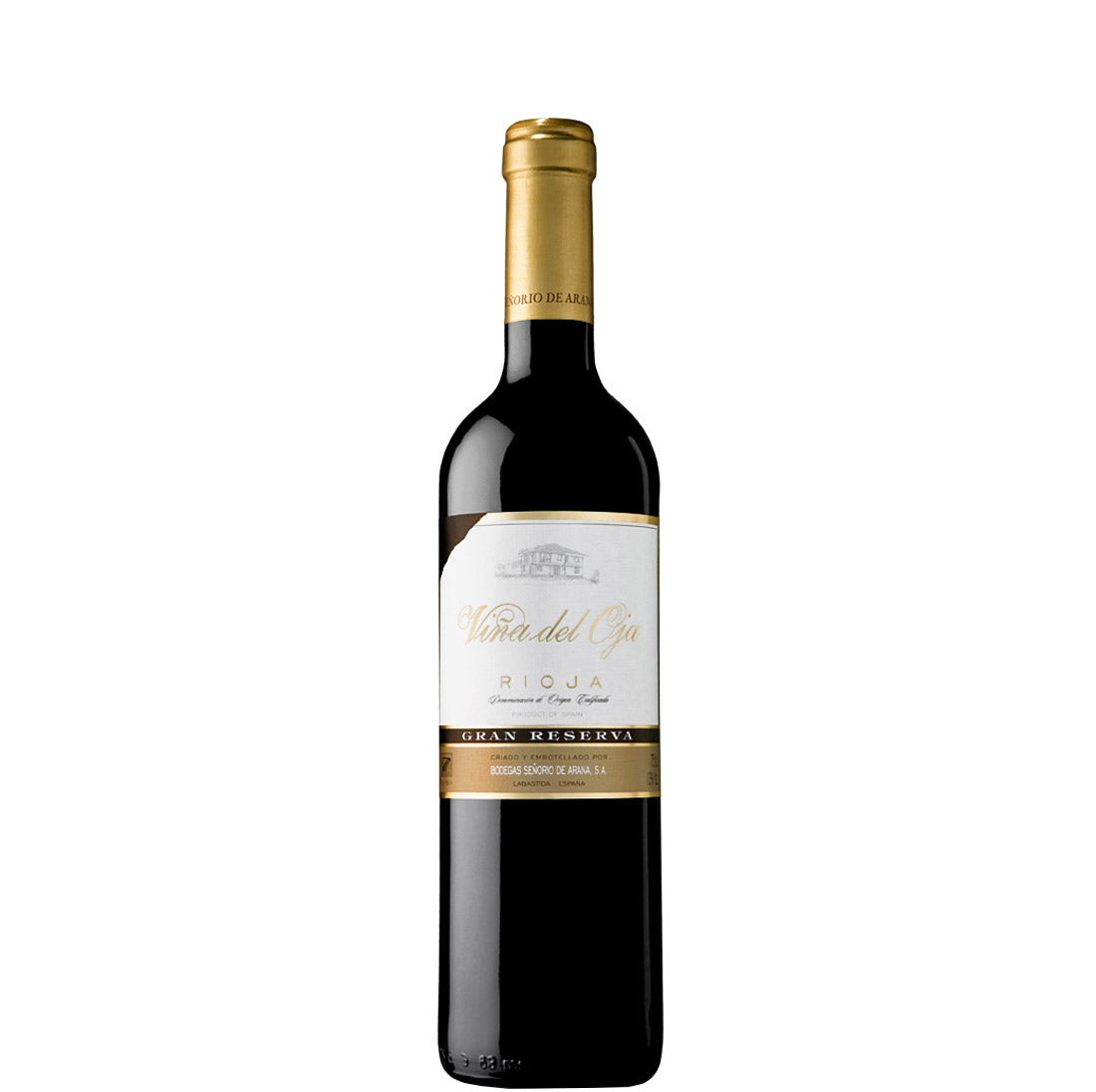
Bodegas Señorío de Arana, Viña Del Oja Rioja Gran Reserva, 2017
Bodegas Señorío de Arana, Viña Del Oja Rioja Gran Reserva, 2017
- Red Still
- 75CL
- 14.5%
- Tempranillo, Mazuelo, Graciano
Couldn't load pickup availability
Bodegas Señorío de Arana is a traditional Rioja Alavesa producer, and its Viña Del Oja Gran Reserva is a fine example of what time can do for Rioja. Made from 90% Tempranillo, with Mazuelo and Graciano adding complexity, the 2017 spent 30 months in a combination of French and American oak before further ageing in bottle.
Now beautifully evolved, it offers dried red berries, savoury spice and hints of vanilla, with a touch of game, leather and balsamic. The palate is silky and composed, with gentle tannins, a fresh menthol edge and a long, savoury finish. Classic Gran Reserva Rioja, with all the complexity that comes from patience. Open alongside slow-cooked lamb, roast beef or mature cheeses.
Already well into its drinking window given the extended ageing before release, this Gran Reserva shows no raw primary fruit left to integrate, having arrived at the bottle already shaped by oak and time. Expect the dried fruit and leather notes to deepen gently over the coming years, with the tannins softening further and the wine gaining a slightly more delicate, ethereal texture.
Tasting Notes
AppearanceA mature garnet core fading to a brick-orange rim, showing clear signs of bottle age.
NoseDried cherry, fig and sun-dried tomato sit alongside leather, cedar and a whisper of clove from extended oak ageing. There's a savoury, almost broth-like depth beneath the fruit, with dried herbs and a touch of tobacco leaf.
PalateSilky and fully resolved, with redcurrant and dried cherry carried on a frame of fine, sandy tannin. Acidity remains lively, lending freshness to the savoury, earthy core, while vanilla and toasted oak linger without dominating.
FinishLong and gently drying, with a final flourish of clove and dried fruit.
Overall impressionA classically built Rioja Gran Reserva, showing the savoury elegance that comes from patient, traditional ageing.
Food Pairings
In Rioja Alta, a wine like this is poured alongside slow-roasted lechazo, the region's milk-fed lamb, cooked simply in a wood-fired oven with little more than salt and garlic. Locals also reach for it with chuletillas al sarmiento, lamb chops grilled over dried vine cuttings, the smoke echoing the wine's own savoury notes. Hearty stews of beans and chorizo, and aged Idiazábal cheese, are equally at home on the table, each offering enough weight and fat to meet the wine's structured tannins.
We think this wine would go well with
Serve at 16-18°C in a large Bordeaux-style glass to let the savoury aromatics open fully. Decanting for 30-45 minutes is worthwhile to soften any reductive notes from bottle age, though it needs no aggressive aeration given its maturity. Avoid over-chilling, which will mute the dried fruit and leather character that defines this style.
The vineyards sit in Rioja Alta around the Oja river, from which the wine takes its name, at altitudes that moderate the continental summer heat and preserve acidity in the fruit. Soils here are a mix of clay-limestone, giving structure and freshness to the Tempranillo, with pockets of ferrous clay lending the Graciano and Mazuelo added depth and colour. The cooler Atlantic influence funnelled through the valley helps retain the vineyard's characteristic elegance despite the long, warm growing season.
Rioja DOCa is Spain's oldest and most tightly regulated wine region, divided into three zones: Alta, Alavesa and Oriental, each offering a distinct expression of Tempranillo-based wine. Gran Reserva is the appellation's most demanding classification, requiring a minimum of two years in oak and three in bottle before release, reserved for wines from strong vintages judged capable of extended ageing. Rioja Alta, home to this wine, is prized for producing the most structured and age-worthy examples within the DOCa, in contrast to the riper, bolder wines typical of Oriental.
2017 was a vintage defined by frost. A severe cold snap at the end of April hit Rioja hard, particularly in lower-lying parts of Rioja Alta and Rioja Oriental, cutting yields significantly in affected plots. What followed was a hot, dry summer that pushed harvest forward to late August and early September in many cases, among the earliest in recent memory. Growers who escaped the frost, or farmed higher sites, brought in healthy, concentrated fruit.
Quality is good to very good where volumes allowed proper ripening, with Tempranillo showing firm structure and dark fruit character, though wines can show the intensity that comes from a smaller, stressed crop. It's a vintage of survivors rather than uniform brilliance, and the best examples reward producers who managed their vineyards carefully through the heat. Many 2017 Riojas are drinking well now, especially at Crianza and Reserva level, though well-made Reservas and Gran Reservas from favoured sites have the structure to continue developing over the next several years.
FAQs
Is this wine ready to drink now?
Yes. Gran Reserva regulations require lengthy oak and bottle ageing before release, so this 2017 is already drinking beautifully and will continue to do so until around 2038.
Should I decant it?
A short decant of 30-45 minutes is recommended to allow the savoury, mature aromatics to open, though it doesn't require the vigorous aeration a younger wine might need.
What food suits this wine best?
Roast lamb, grilled chops cooked over vine cuttings, and aged sheep's cheese are classic regional matches that stand up to its structure without overwhelming its savoury character.
How does Gran Reserva differ from Reserva or Crianza?
Gran Reserva demands the longest combined oak and bottle ageing of the three classifications, reserved for stronger vintages, resulting in a more mature, complex style than the fresher fruit typical of Crianza or Reserva.
Will this wine improve further with cellaring?
It's at its peak now and will hold there for some years, but given the extended ageing already undertaken before release, further long-term cellaring offers little additional benefit.
What grape varieties are in the blend?
Predominantly Tempranillo, with smaller proportions of Mazuelo and Graciano adding colour, acidity and spice to the blend.
-
Free UK Delivery
Learn about deliveryGet free UK delivery when you spend £75 or more on duty paid wine
-
Save 30% on a host of quality wines
Our fine wines are sourced from our sister retailers, but offered at a substantial discount to their previous selling prices.