

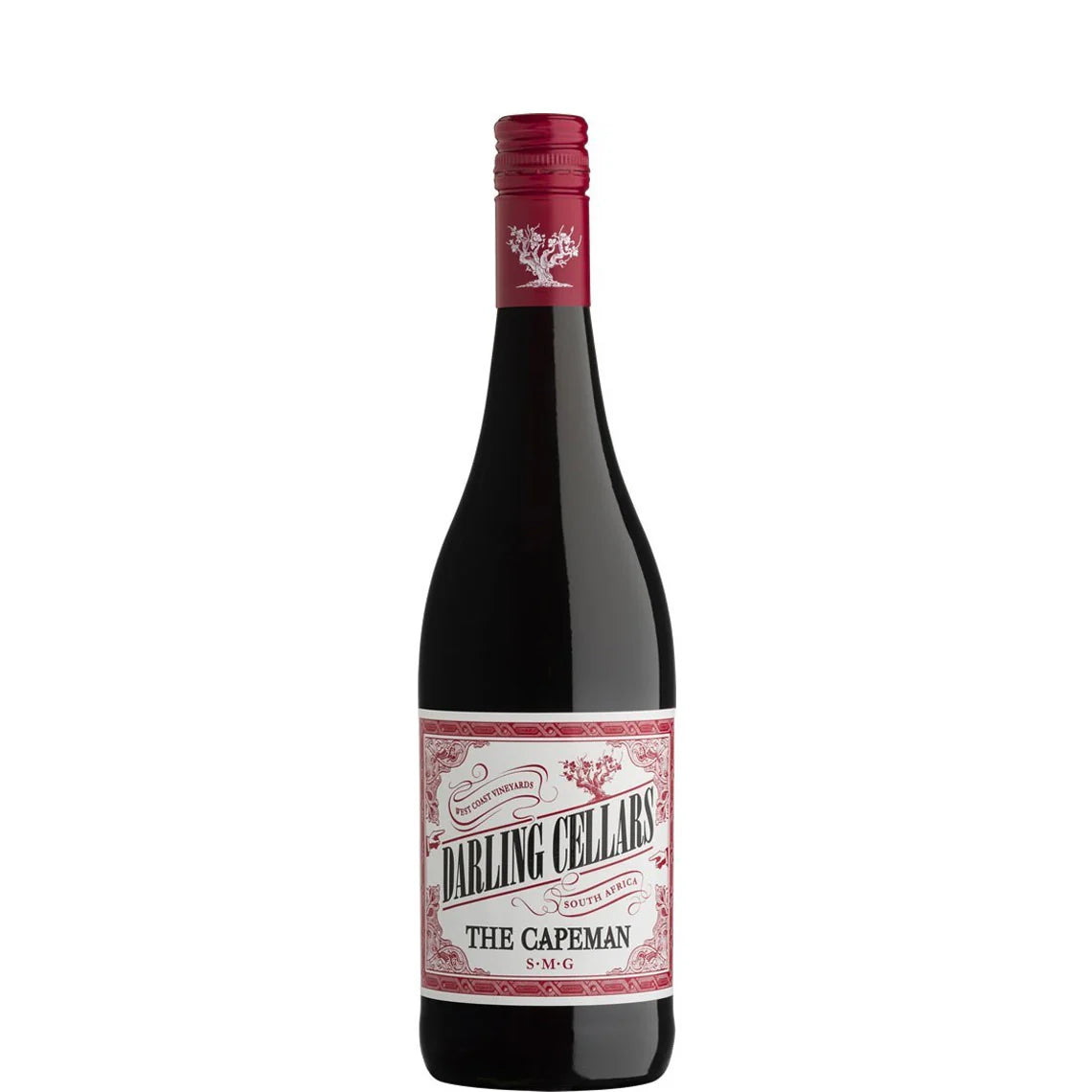
Darling Cellars, The Capeman SMG Red Blend, 2024
Darling Cellars, The Capeman SMG Red Blend, 2024
- Red Still
- 75CL
- 14%
- Shiraz, Mourvèdre, Grenache
Couldn't load pickup availability
Darling Cellars' The Capeman represents an approachable take on the classic Rhône blend from South Africa's cool coastal region. This Shiraz-led blend incorporates Mourvèdre and Grenache to create a wine that balances ripe dark fruit with Mediterranean herb character and gentle spice.
The 2024 vintage delivers immediate drinking pleasure with its fresh berry fruit and soft tannins, while retaining enough structure to develop additional complexity over the next few years. Best enjoyed until 2030 while the primary fruit remains vibrant.
This wine is crafted for relatively early consumption and will show best in its first 3-4 years. The vibrant fruit character will gradually integrate with the herbal and spice elements over the next two years, reaching peak harmony around 2028. While the wine has sufficient tannin structure to age gracefully, it's designed to be enjoyed while the primary fruit remains prominent rather than developing significant secondary complexity.
Tasting Notes
AppearanceDeep ruby red with purple highlights and good clarity.
NoseRipe blackberry and dark plum dominate the bouquet, supported by dried herbs and white pepper spice. Subtle floral lift from the Grenache component adds freshness, while a touch of Mediterranean garrigue provides savoury depth.
PalateMedium-bodied with juicy dark fruit flavours and well-integrated tannins that provide structure without overwhelming the wine's approachable character. The Mourvèdre contributes earthy mineral elements and black olive notes, while the Shiraz backbone delivers pepper and spice. Good acidity maintains freshness throughout.
FinishClean and persistent with lingering black fruit and a gentle peppery warmth.
Overall impressionA well-crafted, food-friendly blend that showcases the harmony possible in South African Rhône-style wines.
Food Pairings
In the Western Cape, Rhône-style blends like this pair naturally with the region's braai culture, complementing grilled boerewors, lamb sosaties, and Cape Malay curry dishes. Local favourites include serving these wines alongside bobotie, the traditional spiced mince dish with its sweet and savoury complexity, or with waterblommetjiebredie, a unique local stew made with water flowers. The wine's herbal character also works beautifully with indigenous game meats like springbok and kudu, often prepared with rooibos and wild herb marinades.
We think this wine would go well with
Serve at 16-18°C to allow the fruit and spice characteristics to express fully. No decanting required as this wine is designed for immediate enjoyment, though a brief 30-minute breathing period in the glass will help integrate the components. Use medium-sized Bordeaux glasses to concentrate the aromatics while providing adequate surface area for the wine to develop.
The Darling region benefits from its proximity to the Atlantic Ocean, which provides cooling maritime breezes that moderate the warm Mediterranean climate. The vineyards are planted on weathered granite soils with good drainage, encouraging deep root penetration and concentrated fruit flavours. The combination of warm days and cool nights allows for extended ripening periods, preserving natural acidity while developing full phenolic maturity in the Rhône varieties.
The Western Cape designation encompasses South Africa's premier wine-producing regions, stretching from the coastal areas near Cape Town to the inland mountain valleys. This broad appellation allows winemakers flexibility to blend fruit from different microclimates and soil types, creating wines that express the diversity of the Cape's terroir. The region's Mediterranean climate and varied topography make it particularly well-suited to both Bordeaux and Rhône grape varieties.
The 2024 growing season in the Western Cape presented winemakers with a tale of two halves. Early summer brought welcome relief from the drought conditions that had plagued previous years, with well-timed winter rains replenishing dam levels and vineyard water reserves. However, the season turned challenging with periods of intense heat that tested vine resilience, particularly in inland regions like Paarl and Stellenbosch. Coastal areas such as Walker Bay and Hermanus benefited from their maritime influence, maintaining more moderate conditions that allowed for extended hang time.
The resulting wines display concentrated flavours with good natural acidity, though yields were generally lower than the long-term average. Sauvignon Blanc from Constantia and Elgin shows particular promise, with bright citrus intensity and mineral precision. Pinotage and Cabernet Sauvignon from warmer sites required careful handling but have produced structured wines with dense fruit character. Most 2024 Western Cape wines will benefit from 2-3 years of cellaring to fully integrate, though the Sauvignon Blancs are already drinking beautifully and should be enjoyed within the next few years.
FAQs
What makes this a good introduction to South African Rhône blends?
The Capeman offers classic Rhône grape varieties crafted in an approachable style, showcasing South Africa's ability to produce food-friendly wines with distinct regional character. Its balance of fruit, spice, and herbs makes it an excellent gateway to understanding how Cape winemakers interpret Mediterranean varieties.
How does the Western Cape climate affect this wine style?
The maritime influence from the Atlantic Ocean provides cooling breezes that preserve natural acidity while allowing full flavour development. This creates wines with both ripe fruit character and fresh herbal elements, distinguishing South African Rhône blends from their Mediterranean counterparts.
What's the ideal cellaring approach for this wine?
Store in a cool, dark place at consistent temperature around 12-15°C. While the wine will develop over 3-4 years, it's designed for relatively early consumption when the primary fruit characteristics are most prominent. No special cellaring requirements beyond standard wine storage conditions.
How does this compare to traditional Rhône Valley wines?
South African expressions tend to show riper fruit character due to the warmer climate, while maintaining freshness from maritime cooling. This wine offers a more approachable style than many traditional Rhône wines, with softer tannins and immediate drinkability while retaining the classic herb and spice character of the grape varieties.
What food styles complement this wine best?
The wine's medium body and balanced structure make it versatile with grilled meats, herb-crusted dishes, and Mediterranean cuisine. Its spice and herb character particularly suits dishes with rosemary, thyme, or pepper, while the soft tannins won't overpower lighter meat preparations or vegetarian options.
-
Free UK Delivery
Learn about deliveryGet free UK delivery when you spend £75 or more on duty paid wine
-
Save 30% on a host of quality wines
Our fine wines are sourced from our sister retailers, but offered at a substantial discount to their previous selling prices.