

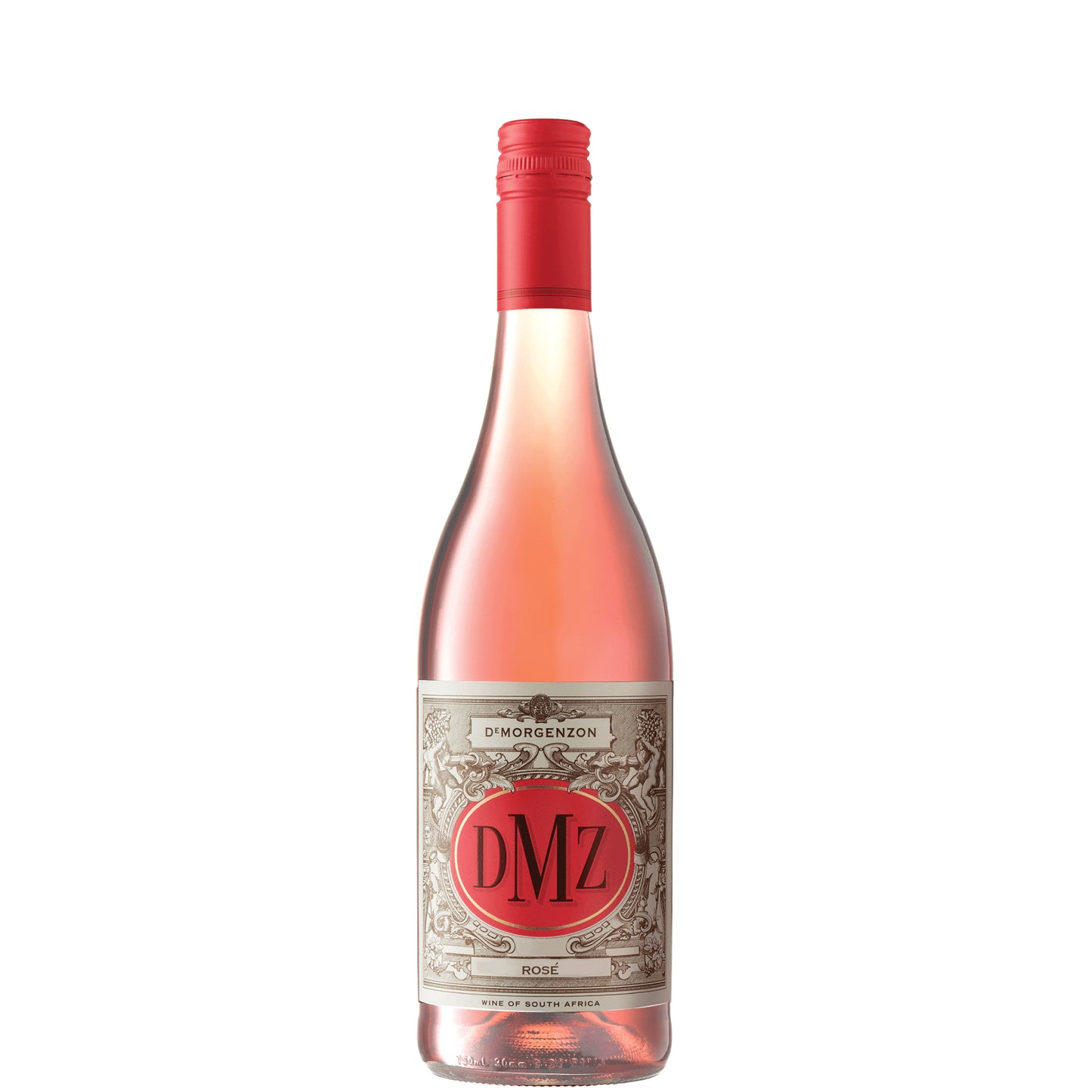
DeMorgenzon, DMZ Garden Vineyards Rosé, 2021
DeMorgenzon, DMZ Garden Vineyards Rosé, 2021
- Rosé Still
- 75CL
- 13.5%
- Mourvèdre, Grenache Noir
Couldn't load pickup availability
DeMorgenzon Garden Vineyards Rosé is made from a blend of 79 % Mourvèdre and 21% Grenache Noir from vineyards situated on the DeMorgenzon estate in the Stellenboschkloof. The nose is fragrant with notes of wild strawberry, watermelon, rose petal, and a hint of white pepper. On the palate, it's dry and crisp, with a refreshing acidity and flavours of red berries, citrus, and a subtle mineral edge.
Elegant and clean, this rosé is perfect for warm weather sipping or pairing with light salads, grilled prawns, or charcuterie.
DeMorgenzon is a highly regarded estate known for its holistic approach to viticulture—classical music is played in the vineyards, and biodiversity is encouraged to enhance terroir expression. The DMZ range represents their modern, fruit-forward line, crafted for accessibility and freshness.
This rosé is crafted for early consumption and will show its best fruit character within the first year after release. The primary strawberry and watermelon flavours will remain vibrant through 2027, supported by the wine's natural acidity. Beyond this point, the fresh fruit character will begin to fade, though the mineral backbone may provide some interest for another six months. Unlike age-worthy reds, this wine will not develop secondary complexity and should be enjoyed whilst young and fresh.
Tasting Notes
AppearancePale salmon pink with bright clarity and a fresh, youthful appearance.
NoseFragrant aromas of wild strawberry and watermelon dominate, lifted by delicate rose petal scents. A subtle white pepper spice adds complexity without overwhelming the fruit. The nose is clean and inviting, speaking to the wine's fresh character.
PalateDry and crisp with refreshing acidity that carries flavours of red berries and citrus across the palate. The mineral edge provides structure and length, whilst the Mourvèdre adds a subtle savoury depth. The wine maintains elegance throughout, never becoming heavy or cloying.
FinishClean and mineral-driven with lingering berry fruit and a hint of spice.
Overall impressionAn elegant, well-balanced rosé that captures the essence of South African terroir whilst remaining accessible and refreshing.
Food Pairings
In the Western Cape, this style of rosé pairs beautifully with traditional South African cuisine such as grilled kingklip with lemon butter, Cape Malay curry dishes where the wine's acidity cuts through aromatic spices, and bokkoms (dried fish) served with fresh bread. Local chefs often serve it alongside sosaties (Cape Malay kebabs) where the wine's mineral edge complements the sweet and savoury marinade. The wine also works splendidly with waterblommetjie bredie, a traditional stew where the floral character echoes the indigenous water flower ingredients.
We think this wine would go well with
Serve well chilled at 8-10°C to preserve the wine's fresh character and crisp acidity. No decanting is necessary as this rosé is designed for immediate enjoyment and benefits from being served directly from the bottle. Use a medium-sized white wine glass or dedicated rosé glass to concentrate the delicate aromas whilst allowing the wine to breathe slightly. The wine is best consumed shortly after opening to maintain its vibrant fruit character.
The DeMorgenzon vineyard sits in the Stellenboschkloof, where decomposed granite soils provide excellent drainage and mineral complexity. The area benefits from cooling maritime influences that help maintain acidity in the grapes while allowing for full flavour development. The combination of warm days and cool nights creates ideal conditions for producing elegant rosé wines with both fruit intensity and refreshing crispness.
Stellenbosch is South Africa's premier wine region, established in 1679 and recognised for producing some of the country's finest wines. The appellation benefits from diverse soils ranging from granite to sandstone, combined with a Mediterranean climate moderated by ocean breezes. Stellenbosch rosés are typically drier in style than many international examples, emphasising mineral precision alongside fruit character. The region's reputation for quality has made it the benchmark for serious South African winemaking.
The 2021 growing season in Stellenbosch delivered one of those quietly exceptional vintages that winemakers cherish but consumers often overlook. Cool, wet conditions early in the season led to later budbreak, followed by a relatively mild summer with well-timed rainfall that kept vines healthy without excessive stress. Harvest began later than usual, allowing grapes to develop complexity while retaining natural acidity. The extended ripening period proved particularly beneficial for red varieties, which achieved full phenolic maturity without the overripeness that can plague warmer years.
The vintage produced wines of remarkable balance and finesse, with Cabernet Sauvignon showing exceptional structure and age-worthy tannins, while Chenin Blanc displays the tension and mineral precision that defines great Stellenbosch whites. Bordeaux blends from top estates demonstrate real elegance, with the cooler conditions allowing Merlot to contribute meaningful complexity rather than merely softening the blend. Most 2021 reds are drinking well now but will reward cellaring for another 8-12 years, while the whites are already showing their considerable charm and should continue improving through 2028.
FAQs
What makes this rosé different from Provence styles?
DeMorgenzon's rosé emphasises fruit character more than typical Provence rosés, with watermelon and strawberry flavours taking centre stage. The South African terroir provides a mineral backbone that's distinct from the herbal, Mediterranean character found in French rosés, whilst maintaining similar elegance and dryness.
Why use Mourvèdre and Grenache for rosé?
Mourvèdre provides structure and subtle spice, whilst Grenache contributes the bright red fruit character. This blend creates more complexity than single-variety rosés, with the Mourvèdre adding a savoury edge that balances Grenache's natural sweetness and prevents the wine from becoming overly simple.
How should I store this wine?
Store in a cool, dark place at consistent temperature, ideally around 12-15°C. Unlike red wines, this rosé should be consumed within 2-3 years of vintage and doesn't benefit from long-term cellaring. Keep bottles on their side if storing for more than a few months.
What's the significance of playing music in the vineyards?
DeMorgenzon believes that classical music creates positive vibrations that may influence plant growth and grape development. Whilst scientifically unproven, this practice reflects the estate's holistic philosophy and commitment to treating their vines with care, contributing to the overall quality of their fruit.
Is this wine suitable for aging?
No, this rosé is designed for immediate consumption and will not improve with age. The fresh fruit character and crisp acidity that define its appeal will diminish over time. Drink within 2-3 years of vintage for optimal enjoyment, with the best period being within the first 18 months.
What food should I avoid with this wine?
Avoid heavily oaked dishes, very rich cream sauces, or intensely spiced foods that might overwhelm the wine's delicate character. Red meat dishes and aged cheeses are also poor matches, as they require more substantial wines with greater tannin structure to provide balance.
-
Free UK Delivery
Learn about deliveryGet free UK delivery when you spend £75 or more on duty paid wine
-
Save 30% on a host of quality wines
Our fine wines are sourced from our sister retailers, but offered at a substantial discount to their previous selling prices.