

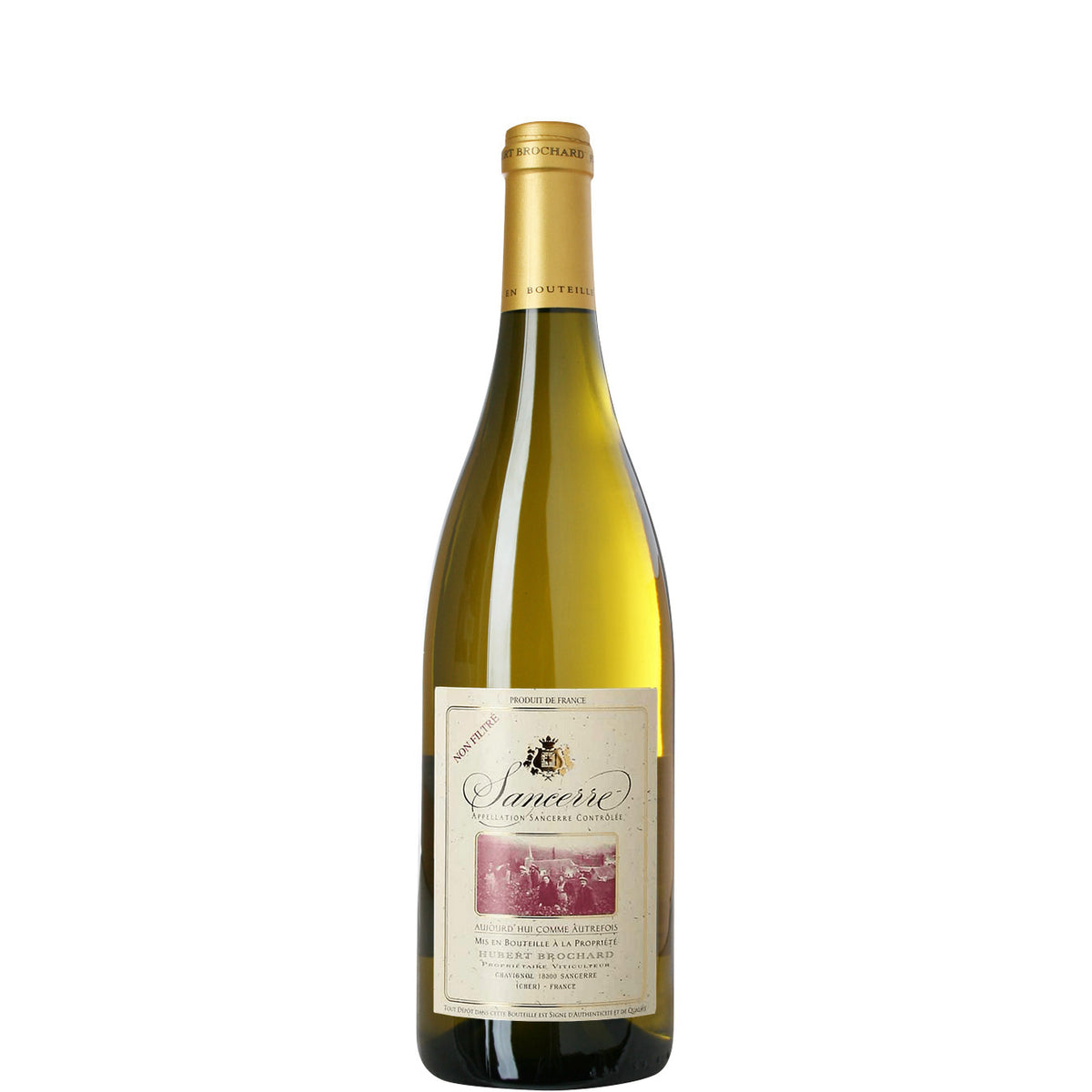
Domaine Hubert Brochard, Sancerre Aujourd'hui Comme Autrefois, 2021
Domaine Hubert Brochard, Sancerre Aujourd'hui Comme Autrefois, 2021
- White Still
- 75CL
- 13%
- Sauvignon Blanc
Couldn't load pickup availability
Domaine Hubert Brochard's Aujourd'hui Comme Autrefois — 'today as yesterday' — is a straightforward statement of intent: Sancerre made the way it has always been made in this part of the central Loire. The 2021 vintage delivered cool, drawn-out ripening that preserved the sharp, precise character Sauvignon Blanc expresses so cleanly on the appellation's famous limestone and flint soils. The result is a wine of real focus: taut, mineral, and built around citrus fruit rather than tropical exuberance.
This is a wine that rewards drinking with food rather than as an aperitif in isolation. The acidity is firm and linear, the texture lean but not austere, and there is enough weight on the mid-palate to hold its own against shellfish, goat's cheese, or a dressed green salad with something sharp in the dressing.
At five years old in 2026, this wine is drinking at or very close to its optimum window. The primary fruit — citrus, green apple, fresh grass — is at its most vivid, and the mineral character from the flint and limestone soils is well-integrated. Over the next two to three years, the fruit will begin to soften slightly and the wine may develop a richer, honeyed quality on the nose, but the acidity will keep it fresh.
Tasting Notes
AppearancePale gold with a faint green rim, clear and bright.
NoseWhite grapefruit, crushed limestone, and green apple open first, with a subtle struck-flint character developing after a few minutes in the glass. There is a fresh cut-grass edge that fades as the wine warms, giving way to a cleaner, more mineral-driven core.
PalateThe entry is precise and dry, with citrus fruit — lemon zest and grapefruit pith — leading over a chalky, saline mid-palate. Acidity is firm and well-integrated, providing real structural backbone without any harshness; the texture is lean but not skeletal, with just enough weight to carry the fruit through to the finish.
FinishClean and persistent with a flinty, mineral aftertaste and a lingering squeeze of citrus.
Overall impressionA focused, site-honest Sancerre that does exactly what the appellation promises: dry, mineral, and refreshing.
Food Pairings
In the villages around Sancerre, the most instinctive pairing is Crottin de Chavignol — the small, firm goat's cheese produced just metres from many of Brochard's vineyards — either fresh and mild or aged to a sharper, more pungent finish. Local river fish, particularly sandre (pike-perch) cooked in butter with capers or simply pan-fried, are a natural match for the wine's acidity and weight. Freshwater crayfish gratin and quenelles de brochet are traditional Loire preparations that sit beautifully alongside Sancerre's citrus-and-mineral frame. A simple green salad dressed with mustard vinaigrette, or asparagus with hollandaise, reflects the straightforward, seasonal cooking of the region and lets the wine's freshness do the work.
We think this wine would go well with
Serve at 10–12°C — cold enough to preserve the wine's precision, but not so chilled that it mutes the mineral character. No decanting is needed or advisable; pour directly from a cold bottle. A standard white wine tulip or a Riesling-style glass with a narrower aperture works well, concentrating the citrus and flint aromas without dispersing them.
Sancerre sits on a series of hillside parcels above the Loire valley, and the Aujourd'hui Comme Autrefois draws fruit from Brochard's holdings across the appellation's three principal soil types: Kimmeridgian limestone (caillottes), clay-limestone (terres blanches), and silex — the dark, flint-rich soils that contribute the most pronounced mineral and smoky character. The 2021 growing season was marked by spring frost pressure and a cool, wet summer followed by a dry, warm September that preserved acidity while allowing phenolic ripeness. Altitude across the hillside sites moderates summer heat and extends the ripening window, a crucial factor in maintaining Sancerre's characteristic freshness.
Sancerre is an AOC in the eastern Loire, centred on the hilltop town of the same name and its surrounding villages, of which Chavignol is the most famous. White Sancerre must be 100% Sauvignon Blanc; red and rosé versions use Pinot Noir. The appellation is defined by its three soil types — caillottes, terres blanches, and silex — each producing a distinct expression: chalky and delicate, rounder and fuller, or stony and smoky respectively. Sancerre sits directly across the river from Pouilly-Fumé, which shares similar soils but often shows a slightly more restrained, gunflint-driven style; Sancerre tends toward a broader, more fruit-forward profile at the village level.
The 2021 growing season in the Loire was defined by frost and frost alone. A brutal late-April freeze, one of the worst in decades, tore through the valley and devastated yields across Muscadet, Anjou, and the central vineyards of Sancerre and Pouilly-Fumé. What survived then faced a cool, damp summer that demanded patience and careful canopy management, with harvest running later than usual into October for many producers. Yields were sharply reduced, but those growers who held their nerve were rewarded with grapes of genuine concentration.
Across the board, 2021 is a leaner, more angular vintage rather than a generous or opulent one. Chenin Blanc performed with particular distinction in Vouvray and Savennières, where its natural acidity found a cool-climate frame that suits long ageing beautifully. Muscadet is pleasingly taut and mineral. Sancerre and Pouilly-Fumé are precise if a little austere, and benefit from another year or two in the cellar. Most whites are drinking well now but will reward patience through 2027 and beyond.
FAQs
What does Aujourd'hui Comme Autrefois mean?
The name translates from French as 'today as yesterday' — a reference to the domaine's commitment to making Sancerre in the same traditional manner as previous generations, without chasing modern stylistic trends. It is the estate's entry-level Sancerre, drawing fruit from across their holdings in the appellation rather than a single parcel.
Is the 2021 Sancerre a good vintage?
2021 was a challenging but ultimately rewarding vintage in the Loire. Spring frosts reduced yields significantly, and a cool, wet summer demanded careful canopy management. The saving grace was a dry, warm September that brought phenolic ripeness while preserving the high natural acidity that defines great Sancerre. The resulting wines are leaner and more citrus-driven than a warmer year like 2020 or 2022, which suits the mineral, precise style of a wine like this one.
How long can I cellar this wine?
Drink now until 2029. This is not a wine designed for long ageing — the Aujourd'hui Comme Autrefois is built around fresh primary fruit and mineral immediacy, both of which are at their best in the first four to five years after harvest. Beyond 2029, the freshness that defines this style is likely to diminish without new complexity emerging to replace it.
What food works best with this Sancerre?
Goat's cheese is the classic pairing — particularly Crottin de Chavignol, the AOC cheese produced in the same village as the domaine. Beyond that, the wine's firm acidity and citrus-mineral character make it a natural partner for shellfish (oysters, langoustines, dressed crab), white fish cooked simply with lemon and butter, asparagus, and green herb-driven salads. Avoid heavily spiced or sweet preparations, which will flatten the wine's freshness.
Is this wine oaked?
No. The Aujourd'hui Comme Autrefois is fermented and aged in stainless steel tank, which is standard practice for this style of Sancerre. Oak would overlay the mineral and citrus character that defines the wine; the clean tank-ageing keeps the focus entirely on the fruit and terroir.
How does this compare to Pouilly-Fumé?
Both appellations sit on similar Kimmeridgian limestone and silex soils either side of the Loire, and both use 100% Sauvignon Blanc. Pouilly-Fumé tends to show a more restrained, gunflint-dominated profile and can feel slightly more closed in youth. Sancerre at this level is typically more immediately expressive — citrus-forward and generous — making it the more approachable of the two young, though the finest examples of each appellation are broadly comparable in quality and longevity.
-
Free UK Delivery
Learn about deliveryGet free UK delivery when you spend £75 or more on duty paid wine
-
Save 30% on a host of quality wines
Our fine wines are sourced from our sister retailers, but offered at a substantial discount to their previous selling prices.