

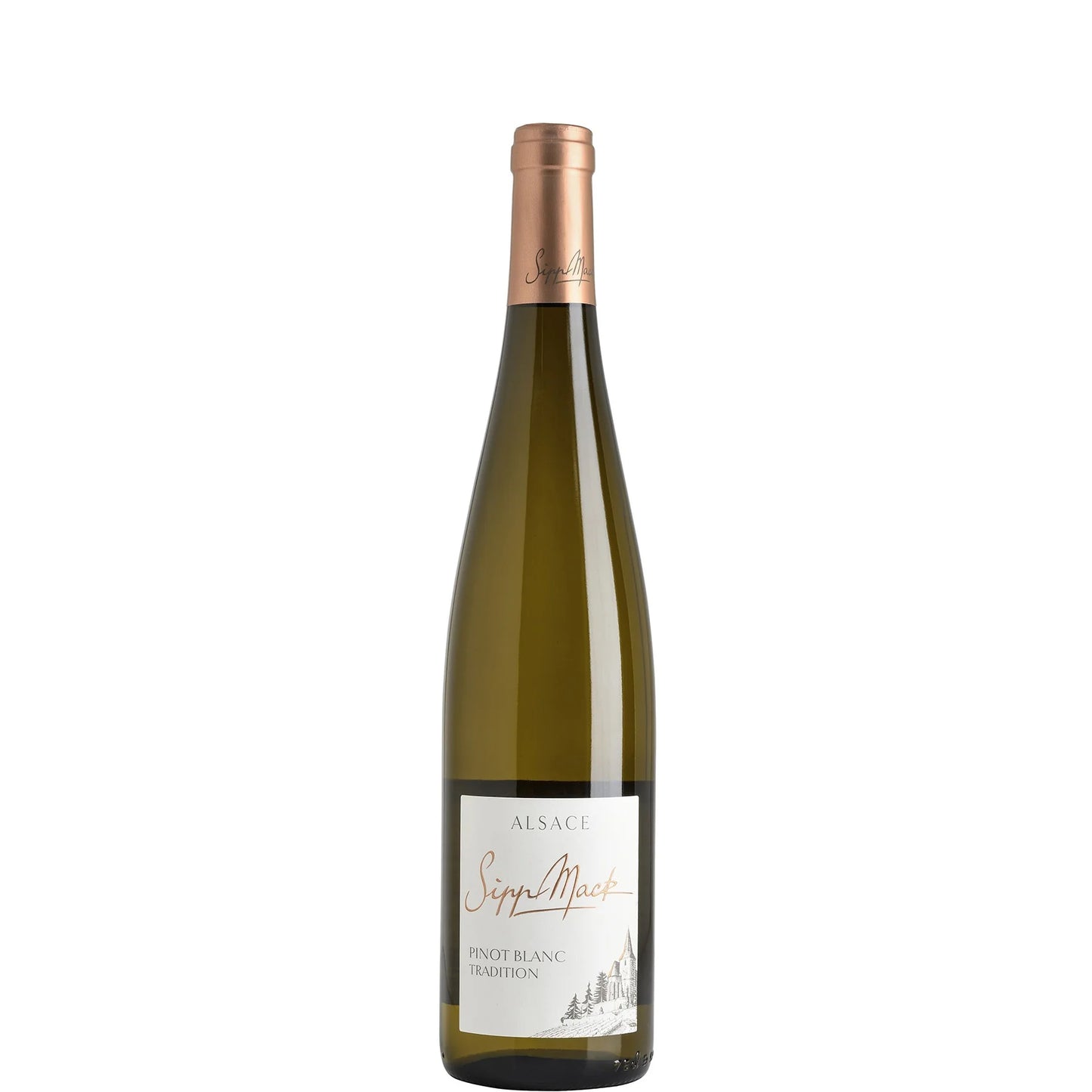
Domaine Sipp Mack, Pinot Blanc, 2019
Domaine Sipp Mack, Pinot Blanc, 2019
- White Still
- 75CL
- 13.5%
- Pinot Blanc
Couldn't load pickup availability
Sipp Mack's Pinot Blanc is fresh and inviting on the nose, with delicate aromas of acacia flowers. The palate is rich yet lively, with floral notes layered over juicy peach and pear, bright citrus flavours, and a dazzling freshness that makes it incredibly food-friendly. A versatile, thirst-quenching white, it pairs effortlessly with a wide variety of dishes.
While not as aromatic as some Alsatian varieties, Pinot Blanc is a true chameleon grape: easy-drinking, adaptable, and consistently enjoyable.
This 2019 is drinking at its peak now, with primary fruit flavours still vibrant and acidity well-integrated. Over the next year or two, the wine will maintain its freshness but may lose some of its current exuberance. Unlike more complex Alsatian varieties, Pinot Blanc is designed for early consumption and won't develop significant secondary characteristics. The fruit will gradually become more mellow, but the wine's essential character will remain consistent. Beyond 2028, the wine will likely begin to lose its defining freshness.
Tasting Notes
AppearancePale gold with brilliant clarity and a gentle viscosity that suggests good texture.
NoseDelicate acacia blossom aromatics lead the way, followed by fresh pear and white peach. A subtle mineral backdrop provides structure without overwhelming the fruit. The nose is inviting rather than dramatic, typical of well-made Pinot Blanc.
PalateMedium-bodied with excellent balance between richness and freshness. Juicy stone fruit flavours dominate the mid-palate, while bright citrus acidity keeps everything lively and food-friendly. The texture is smooth and rounded without being heavy.
FinishClean and refreshing with lingering fruit and a gentle mineral persistence.
Overall impressionA textbook Alsace Pinot Blanc that delivers exactly what the variety promises: freshness, versatility, and immediate pleasure.
Food Pairings
In Alsace, Pinot Blanc is the natural partner for the region's hearty cuisine, particularly choucroute garnie with its mix of sauerkraut, sausages, and smoked pork. The wine's acidity cuts through rich dishes like coq au Riesling and tarte flambée, while its gentle fruit complements local river fish such as pike-perch. Munster cheese, despite its pungency, pairs beautifully with Pinot Blanc's clean finish. The wine also accompanies seasonal asparagus dishes that are beloved throughout the region.
We think this wine would go well with
Serve well-chilled at 8-10°C to preserve the wine's fresh character and acidity. No decanting is necessary as Pinot Blanc is made for immediate enjoyment. Use medium-sized white wine glasses to concentrate the delicate aromatics without overwhelming them. The wine benefits from being opened just before serving to maintain its vibrant freshness.
The estate's Pinot Blanc vines are planted on the mixed soils typical of Alsace's lower slopes, combining clay, limestone, and sandstone elements. The continental climate provides warm, dry summers ideal for ripening, while the Vosges Mountains shelter the vineyards from Atlantic weather systems. These conditions allow Pinot Blanc to develop its characteristic balance of richness and acidity.
Alsace AOC permits both varietal bottlings and blends, with strict rules governing grape varieties and minimum ripeness levels. The region's unique Germanic winemaking tradition within France produces distinctively dry, food-friendly wines that differ markedly from their German counterparts. Pinot Blanc represents one of Alsace's most approachable expressions, offering immediate pleasure rather than the complexity of Riesling or Gewürztraminer.
The 2019 growing season in Alsace brought welcome relief after several challenging years, delivering ideal conditions that allowed producers to craft wines of exceptional purity and balance. A warm, dry summer with well-timed rainfall ensured healthy fruit development, while cool nights preserved the crucial acidity that defines great Alsatian wines. The harvest proceeded smoothly under favourable weather, allowing vignerons to pick at optimal ripeness without the pressure of approaching storms or disease.
This vintage stands as one of Alsace's finest in recent memory, producing wines with remarkable concentration and elegant structure. Riesling achieved particularly impressive results, displaying the mineral precision and ageing potential that marks truly great years. Gewürztraminer and Pinot Gris show beautiful aromatic intensity without excessive weight, while Pinot Blanc offers charming immediacy. The wines are drinking beautifully now for early pleasure, yet the best examples possess the backbone to develop gracefully over the next decade, making 2019 an excellent choice for both current enjoyment and cellaring.
FAQs
How does this compare to other Alsace whites?
Pinot Blanc sits between Sylvaner and Riesling in terms of complexity, offering more body than the former but less aromatic intensity than the latter. It's more food-friendly than Gewürztraminer and earlier-drinking than most Rieslings, making it an excellent introduction to Alsatian wines.
What's the difference between Pinot Blanc and Pinot Grigio?
While both are mutations of Pinot Noir, Alsace Pinot Blanc tends to be more textured and mineral-driven than Italian Pinot Grigio. The Alsatian expression typically shows more stone fruit character and has better natural acidity, making it more versatile with food.
Can this wine be aged?
Pinot Blanc is made for early consumption and is best enjoyed within 2-3 years of vintage. Unlike Riesling or Gewürztraminer, it won't develop complex secondary flavours with age and may lose its appealing freshness if kept too long.
What temperature should I serve this at?
Serve well-chilled at 8-10°C. This temperature preserves the wine's fresh acidity and prevents the alcohol from becoming prominent. If too cold, the delicate aromatics will be muted; if too warm, the wine loses its refreshing character.
Is this wine dry or off-dry?
This Pinot Blanc is dry, typical of modern Alsatian winemaking. Any perception of sweetness comes from ripe fruit flavours rather than residual sugar. The wine's good acidity ensures a clean, refreshing finish without any cloying sensation.
Why choose Pinot Blanc over more famous Alsace varieties?
Pinot Blanc offers excellent value and versatility without the intensity that can make other Alsatian varieties challenging to pair with food. Its gentle character makes it suitable for casual drinking while still maintaining the quality and terroir expression that defines good Alsace wine.
-
Free UK Delivery
Learn about deliveryGet free UK delivery when you spend £75 or more on duty paid wine
-
Save 30% on a host of quality wines
Our fine wines are sourced from our sister retailers, but offered at a substantial discount to their previous selling prices.