

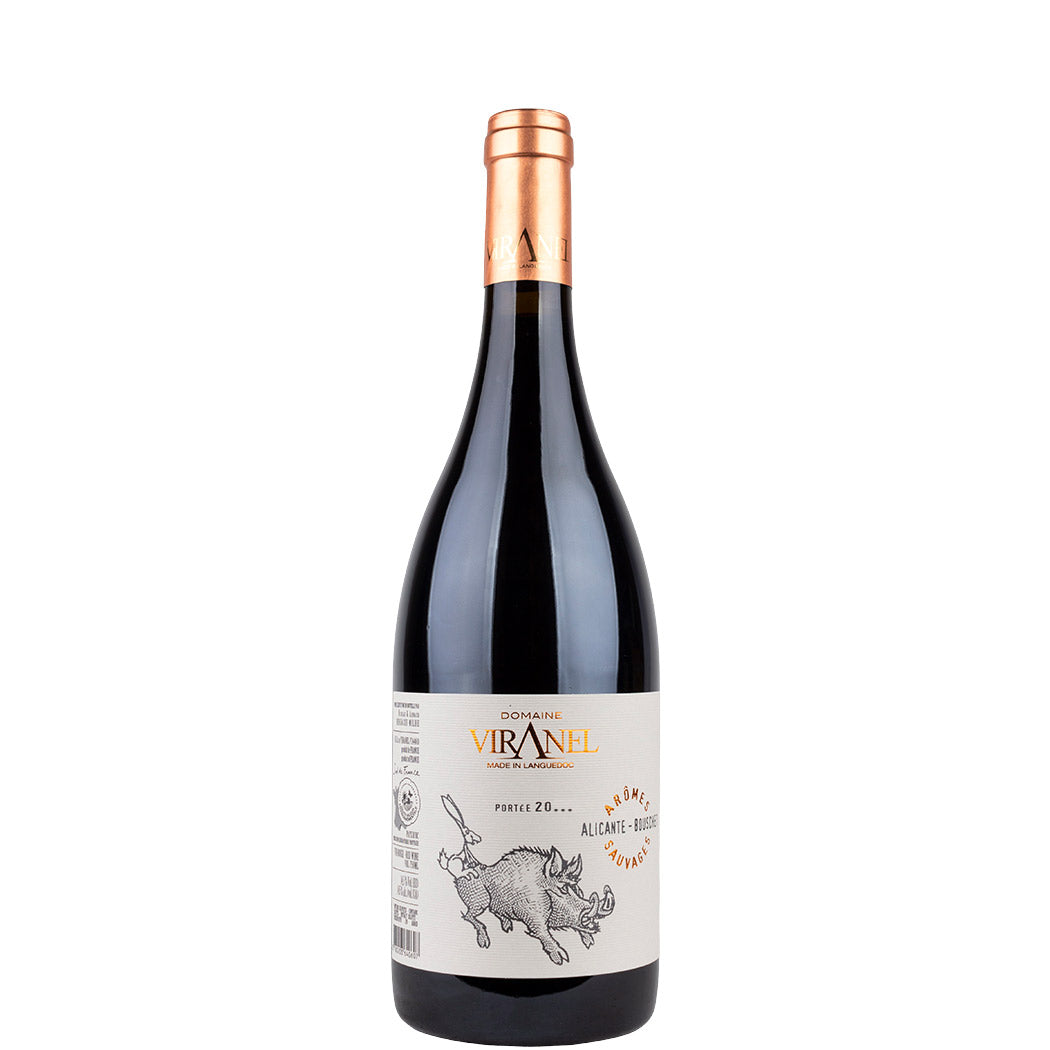
Domaine Viranel, Arômes Sauvages, 2020
Domaine Viranel, Arômes Sauvages, 2020
- Red Still
- 75CL
- 13.5%
- Alicante Bouschet
Couldn't load pickup availability
Arômes Sauvages - wild aromas indeed! Despite the dark brooding colour, the palate is suave and well rounded with great depth of flavour. Not heavy, the tannins are ripe and unobtrusive. Notes of dark chocolate and mocha are abundant in the finish with hints of lead pencil and savoury spice.
Viranel's Arômes Sauvages is made from a local grape variety - Alicante-Bouschet - a hybrid grape from the crossing of Grenache Noir and Petit Bouschet back in 1855. These vines are old, planted back in 1939, so harvest yields are small and of the highest quality. Domaine Viranel harvests by hand at perfect maturity, and traditional vinification takes place in concrete tanks.
The 2020 vintage is drinking beautifully now, with primary dark fruit still prominent alongside emerging savoury complexity. The wine should continue developing until 2030, gaining more earthy, gamey character while retaining its distinctive herbal backbone. The coffee and chocolate elements will likely become more pronounced over the next few years. Drink by 2032 while the fruit remains vibrant.
What the critics say:
"100% Alicante Bouschet, planted in 1939, yields 28 hl/ha. Stainless steel and concrete tanks. Dark wild berries and lavender. White pepper. Distinctive and crunchy and packed with crackling texture. Layers of just-ground-dark-roasted coffee, juniper, pine resin and savoury plum. Lots of rugged character. Definitely a wine for rich game dishes or a rare very well-hung steak (no sauce, thrice-cooked chips, please). "
Tasting Notes
AppearanceDeep, brooding purple-black colour with excellent concentration.
NoseExpressive wild berry aromatics meld with garrigue herbs - thyme, fennel, and lavender. White pepper and pine resin add complexity, while darker elements of roasted coffee and juniper emerge with aeration. A touch of game and musk rounds out this wild, distinctive nose.
PalateDespite the dark appearance, the palate shows surprising elegance with ripe, unobtrusive tannins. Dark plum and blackberry fruit carries savoury spice and ground coffee flavours. The texture is crunchy and energetic, with layers of pine resin and just-roasted coffee beans building through the mid-palate.
FinishLong finish of dark chocolate, mocha, and graphite with persistent savoury spice.
Overall impressionA distinctive, characterful wine that showcases the untapped potential of well-grown Alicante Bouschet.
We think this wine would go well with
Serve at 16-18°C in large Burgundy glasses to allow the complex aromatics to develop fully. Decant for 45 minutes to an hour to soften the structure and reveal the wine's garrigue complexity. The wine benefits from breathing time, which allows the coffee and spice elements to integrate with the dark fruit.
The estate's 1939-planted Alicante Bouschet vines yield just 28 hectolitres per hectare, producing concentrated fruit with wild, garrigue character. The Mediterranean climate and poor soils stress the old vines naturally, concentrating flavours and creating the distinctive herbal complexity that defines this wine. The terroir imparts lavender, thyme, and pine resin aromatics that complement the grape's naturally dark fruit character.
The 2020 growing season in Languedoc-Roussillon brought significant challenges that ultimately shaped a vintage of surprising quality. A wet spring delayed budbreak and created disease pressure, particularly troublesome in the coastal appellations. However, a hot, dry summer allowed grapes to ripen well, though harvest began earlier than usual across the region. The key challenge came from intense heat spikes in August, which required careful canopy management and selective picking to preserve freshness in the final wines.
Despite the difficult conditions, 2020 produced wines with concentrated flavours and good structure. Syrah and Grenache performed particularly well in the hillside vineyards, developing rich, spicy character whilst maintaining decent acidity levels. Mourvèdre struggled more in the heat, though careful producers crafted some excellent examples. The reds show immediate appeal with their ripe fruit and approachable tannins, making them drinking beautifully now. Most wines from quality producers will develop well over the next 5-8 years, though the finest examples from cooler sites have the structure for longer cellaring.
FAQs
What makes Alicante Bouschet special as a grape variety?
Alicante Bouschet is one of the few red-fleshed grape varieties, created in 1855 from crossing Grenache Noir and Petit Bouschet. Unlike most red grapes which have white flesh, Alicante Bouschet produces intensely coloured, distinctive wines with unique aromatic profiles combining dark fruit with herbal complexity.
Why hasn't this grape been planted more widely?
Despite its distinctive character, Alicante Bouschet requires specific terroir and careful handling to avoid heavy, jammy wines. The grape performs best in Mediterranean climates with poor soils that naturally restrict yields. Many producers struggle to achieve the balance that Domaine Viranel demonstrates with their 1939 plantings.
How does this compare to other southern French reds?
Arômes Sauvages offers more distinctive character than typical Languedoc blends, with unique wild aromatics from the pure Alicante Bouschet. Where many southern French reds rely on Syrah or Grenache blends, this wine provides singular personality with its combination of dark fruit, garrigue herbs, and coffee complexity.
What's the significance of the 1939 planting date?
These 87-year-old vines produce tiny yields of exceptionally concentrated fruit. Old vines develop extensive root systems that access deep soil layers, creating more complex flavours and better natural balance. The age also means lower yields - just 28 hectolitres per hectare compared to 50-60 hl/ha for younger plantings.
Why do wild animals feature on the label?
Wild boar and rabbits regularly visit the Viranel vineyard and compete with harvesters for the ripe grapes, reducing already small yields further. This wildlife interaction reflects the estate's natural approach and the wine's 'wild aromatics' that give Arômes Sauvages its name.
Is this wine suitable for cellaring?
Yes, the wine will develop beautifully until 2030-2032, gaining more savoury, earthy complexity while retaining its herbal backbone. The ripe tannins and natural acidity provide good structure for medium-term ageing, though it's equally enjoyable now with proper decanting.
-
Free UK Delivery
Learn about deliveryGet free UK delivery when you spend £75 or more on duty paid wine
-
Save 30% on a host of quality wines
Our fine wines are sourced from our sister retailers, but offered at a substantial discount to their previous selling prices.
- Choosing a selection results in a full page refresh.
- Opens in a new window.