

- Red Still
- 75CL
- 13%
- Gamay
Couldn't load pickup availability
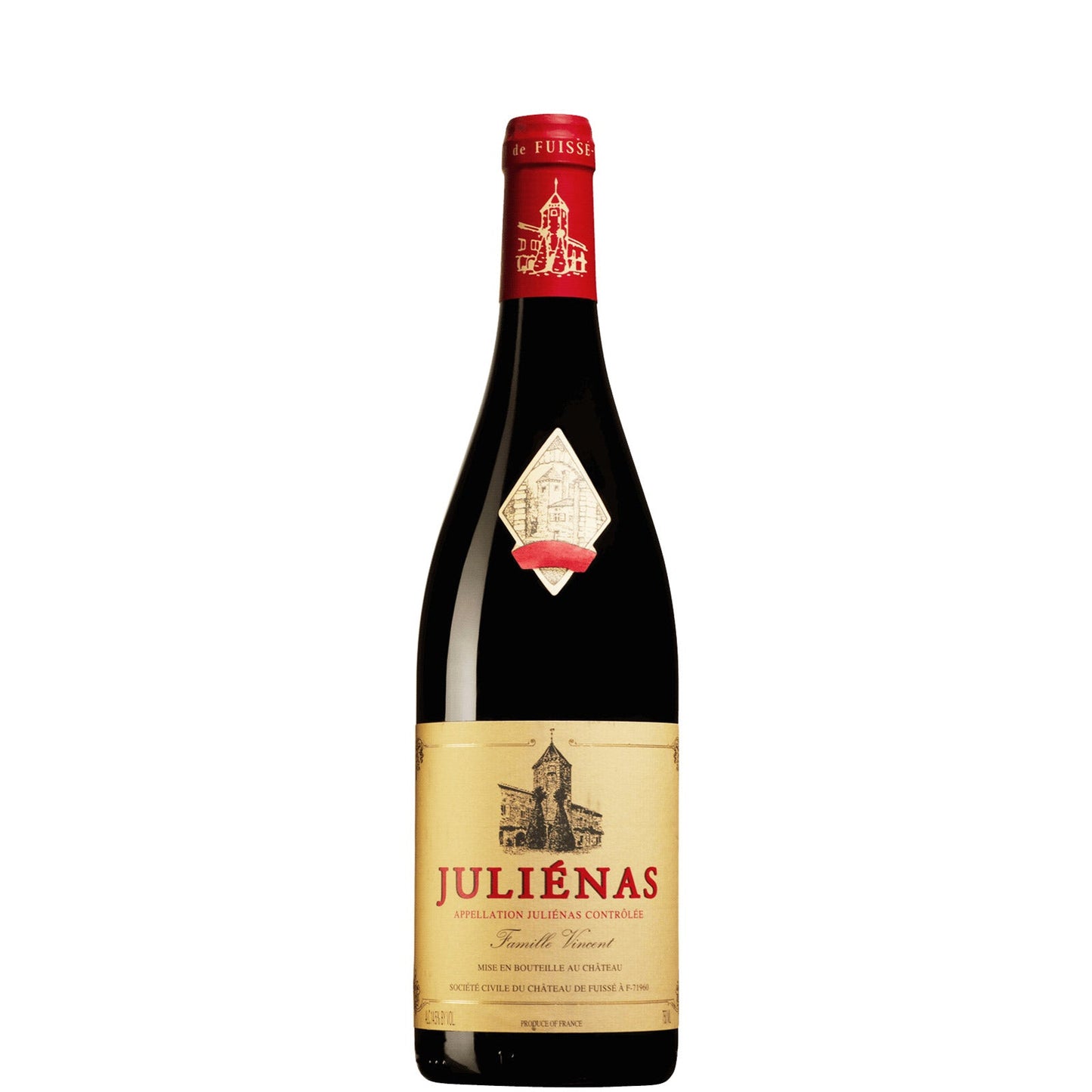
This 2018 Juliénas opens with lifted aromas of ripe red berries - cherry, raspberry, and wild strawberry - alongside hints of violet, spice, and crushed granite. On the palate, it’s medium-bodied with fresh acidity and fine-grained tannins, offering a juicy core of red fruit balanced by earthy minerality. It finishes long and elegant, showing both charm and structure typical of this Beaujolais cru.
Château-Fuissé, though best known for its white wines from Pouilly-Fuissé, brings its Burgundian precision to this Juliénas red. The Gamay grapes are sourced from granite-rich soils, harvested by hand, and vinified with partial destemming to preserve purity and finesse. A portion of the wine is aged in oak, adding subtle depth without overpowering the fruit.
The result is a polished, terroir-driven expression of Juliénas with aging potential and immediate appeal.
The 2018 vintage in Beaujolais delivered ripe, generous fruit alongside sufficient structure for short-to-medium-term development. At eight years old, this Juliénas is approaching its drinking window peak, with primary fruit still vivid but beginning to integrate with earthy, spice-driven secondary notes. Over the next two to three years, the tannins will soften further and the granite mineral character should become more pronounced.
Tasting Notes
AppearanceBright ruby with a lively, translucent rim that speaks to Gamay's inherently light pigmentation.
NoseFresh red cherry and raspberry lead, sharpened by a stony, almost crushed-granite mineral edge. With a few minutes in the glass, dried violet and a faint dusting of white pepper begin to emerge alongside a subtle flicker of oak-derived spice.
PalateMedium-bodied with bright, mouthwatering acidity that gives the wine real energy. The red fruit is juicy but disciplined, framed by fine-grained tannins that add structure without austerity, and an earthy, mineral undercurrent keeps things anchored.
FinishClean and persistent, with red fruit and a mineral salinity that lingers well past the swallow.
Overall impressionA precise, well-made Juliénas that balances the cru's natural charm with genuine structural ambition — gratifying now but better still with a year or two more in the cellar.
Food Pairings
In the Beaujolais and the broader Lyon region, Gamay-based crus like Juliénas are the table wine of choice for the city's famous bouchons. Locals pour it alongside andouillette grillée, quenelles de brochet with sauce Nantua, or a plate of rosette de Lyon with cornichons. Charcuterie is a natural partner — rillettes, jambon persillé, or a salade lyonnaise with lardons and a poached egg are classic matches. At the table rather than the bistro, a simple roast chicken or a rabbit cooked with mustard and thyme asks for little more than a well-chilled cru Beaujolais.
We think this wine would go well with
Serve at 14–16°C — slightly cooler than most reds, which tightens the acidity and brightens the fruit. At eight years old, a brief decant of 20–30 minutes will open the wine up without stripping the primary character that still defines it. A standard Burgundy tulip glass is ideal, giving the aromas room to gather without dispersing too quickly.
Juliénas sits at the northern tip of the Beaujolais crus, where granite and schist soils dominate. The granite subsoils here drain well and retain warmth, encouraging Gamay to produce wines with firmer structure and more mineral tension than the sandier southern crus. Elevations typically range from 250 to 450 metres, and the continental climate brings warm summers and cool nights that preserve acidity and aromatic precision.
Juliénas is one of the ten Beaujolais crus, appended with AOC status in 1938 and widely regarded as one of the more structured and age-worthy of the group. Wines must be made from Gamay Noir and must reach a minimum of 10% ABV. Compared to the exuberant fruit of Fleurie or the roundness of Brouilly, Juliénas tends toward more grip and savoury depth, a reflection of its granite and schist soils and higher-altitude sites.
The 2018 growing season in Beaujolais was shaped by a warm, dry summer that followed a wet spring, producing grapes with excellent ripeness and generous natural sugars. Heat stress was a concern in some plots, but the region's granite and schist soils helped retain enough moisture to keep vines in balance. Yields were relatively low, concentrating flavour in the fruit. Gamay thrived in these conditions, producing wines with deep colour, plush red and dark berry fruit, and a roundness that is immediately appealing.
This is a rich, generous vintage that delivered some of the finest Beaujolais in recent memory, drawing comparisons to the celebrated 2015. The wines have excellent structure without sacrificing the bright, juicy character that defines the appellation at its best. Lighter cuvées and Nouveau-style wines are best enjoyed now, while the top Crus, particularly Moulin-à-Vent and Morgon, continue to reward patience and should drink well through 2025 to 2028.
FAQs
Is this Juliénas ready to drink now?
Yes. The 2018 is drinking well from 2024 onwards, with fresh red fruit and enough structure to hold interest. If you have a bottle, there is no compelling reason to wait further — though it will remain enjoyable until around 2030.
Why is Château-Fuissé, a Pouilly-Fuissé estate, making a Beaujolais?
Château-Fuissé is based in the Mâconnais, which borders Beaujolais geographically and shares a similar mindset around terroir-driven, precise winemaking. Antoine Vincent and the family have applied their Burgundian discipline to sourcing and vinifying Gamay from Juliénas, treating it with the same care as their white wines — hand-harvesting, partial destemming, and restrained oak use.
How should I store this wine?
Store horizontally in a cool (10–14°C), dark, and humidity-stable environment. Avoid temperature fluctuations, which are more damaging than a consistently slightly warmer cellar. A dedicated wine fridge is entirely adequate if a proper cellar is not available.
What makes Juliénas different from other Beaujolais crus?
Juliénas is one of the more structured and savoury crus, a result of its granite and schist soils and higher-altitude sites. It tends to show firmer tannins and more mineral character than Fleurie or Brouilly, and generally benefits from a year or two of cellaring more than many of its neighbours.
Is this suitable for a gift or a special occasion?
It works well as a dinner-table gift, particularly for someone who appreciates Burgundy and is curious about the region's Gamay potential. It is not an investment-grade bottle, but as a producer-led, terroir-focused expression of a serious Beaujolais cru, it carries genuine credibility.
Can I serve this with fish or vegetarian dishes?
Yes, within reason. Its bright acidity and relatively light body make it a credible partner for substantial fish dishes — think salmon en croûte or a tuna niçoise — and for earthy vegetarian food such as mushroom risotto, lentil dishes, or roasted root vegetables. It is not the wine for delicate white fish or creamy seafood sauces.
-
Free UK Delivery
Learn about deliveryGet free UK delivery when you spend £75 or more on duty paid wine
-
Save 30% on a host of quality wines
Our fine wines are sourced from our sister retailers, but offered at a substantial discount to their previous selling prices.