

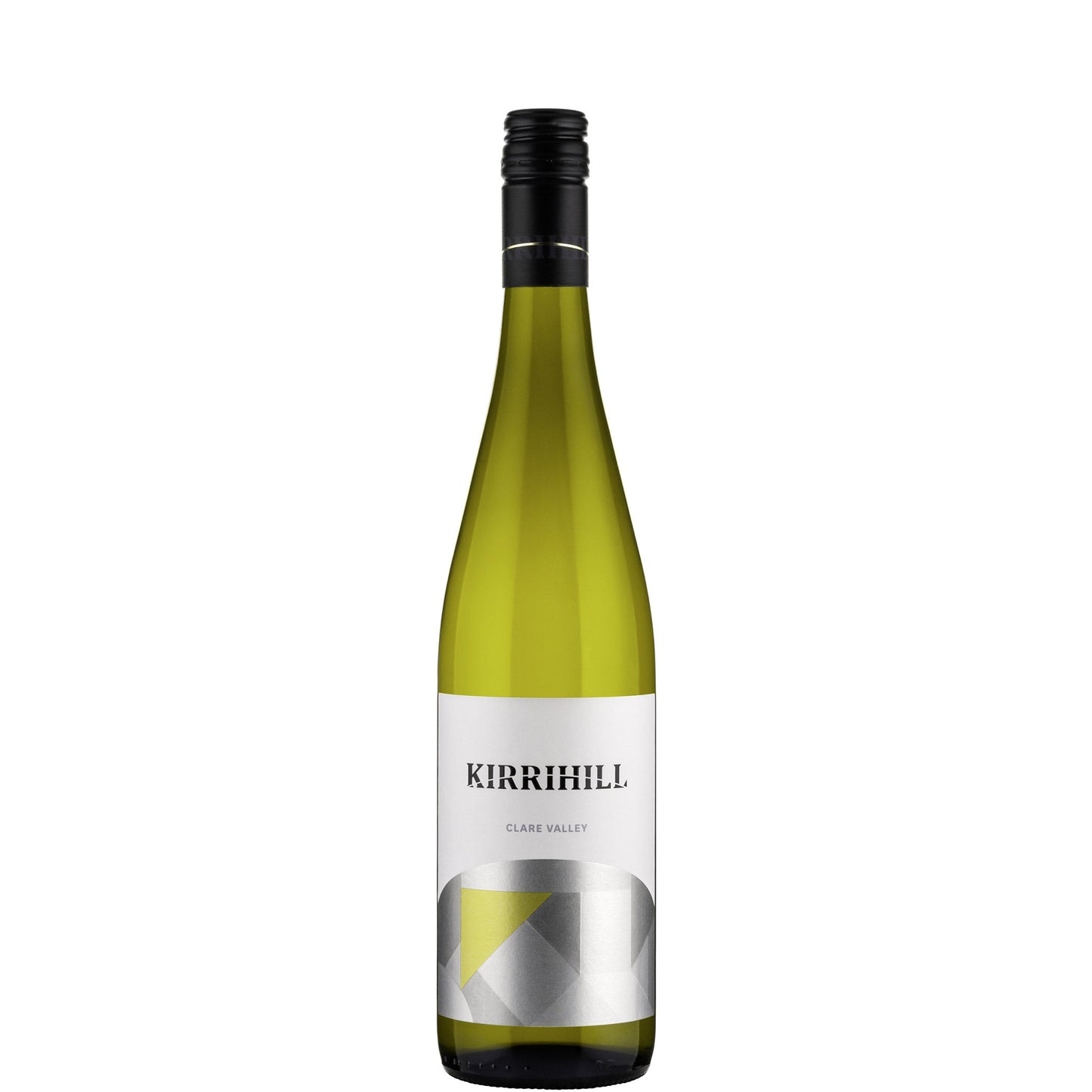
Kirrihill Wines, Riesling, 2023
Kirrihill Wines, Riesling, 2023
- White Still
- 75CL
- 12.5%
- Riesling
Couldn't load pickup availability
Kirrihill Wines operates from South Australia's Clare Valley, where the continental climate and slate-rich soils produce some of Australia's finest Riesling. This 2023 vintage captures the variety's hallmark freshness with precise citrus and stone fruit character, supported by the mineral backbone that makes Clare Valley Riesling so distinctive.
At three years old, this wine shows the crisp, youthful character that defines quality Australian Riesling. The natural acidity provides excellent structure whilst citrus and orchard fruit flavours remain vibrant. Drink now for its fresh appeal or cellar until 2032 to allow the wine's mineral complexity to develop further.
This 2023 vintage currently displays primary citrus and stone fruit character with emerging mineral complexity. Over the next 2-3 years, expect the citrus elements to integrate whilst developing secondary aromas of toast and honey. The wine should reach its peak around 2028-2030, when the fruit and mineral components achieve perfect balance. Beyond 2032, the fresh fruit character will begin to fade, though the wine may develop interesting petrol and lanolin notes characteristic of aged Riesling.
Tasting Notes
AppearancePale straw with brilliant clarity and a slight green tinge around the rim.
NoseImmediate citrus freshness with lime zest and green apple leading the aromatics. Subtle white peach and pear emerge with aeration, whilst underlying mineral notes provide complexity. A faint floral character adds elegance without overwhelming the fruit.
PalateCrisp and precise on entry with vibrant lime and lemon flavours supported by excellent natural acidity. Stone fruit character develops mid-palate alongside subtle slate minerality that defines quality Clare Valley Riesling. The wine maintains freshness throughout with no hint of residual sugar, showcasing classic dry Australian style.
FinishClean and lingering with citrus zest and mineral notes extending well beyond the swallow.
Overall impressionA textbook Clare Valley Riesling that balances immediate drinkability with the structure for short to medium-term cellaring.
Food Pairings
Clare Valley locals traditionally pair their Riesling with fresh seafood from nearby Spencer Gulf, particularly King George whiting and blue swimmer crab prepared simply with lemon and herbs. The wine's crisp acidity complements the region's excellent goat's cheese from local producers, whilst its mineral character works beautifully with native Australian ingredients like saltbush lamb and lemon myrtle. German-influenced dishes remain popular in the valley, reflecting the area's 19th-century settlement patterns, with Riesling accompanying house-made sausages and sauerkraut.
We think this wine would go well with
Serve chilled at 8-10°C in a medium-sized white wine glass with a tulip shape to concentrate the aromatics. No decanting required as this wine benefits from immediate service to preserve its fresh character. Allow the wine to warm slightly in the glass to reveal its full aromatic complexity.
The Clare Valley's continental climate features warm days and cool nights, crucial for maintaining acidity in Riesling whilst developing flavour complexity. The region's ancient slate and limestone soils provide excellent drainage and contribute the mineral character that distinguishes Clare Valley Riesling from other Australian regions. Elevation ranges from 300-500 metres, with vineyards positioned to capture cooling afternoon breezes that preserve the grape's natural freshness.
Clare Valley sits 120 kilometres north of Adelaide and represents Australia's premier Riesling region. The valley's seven sub-regions each contribute distinct characteristics, with slate soils predominating in the cooler southern areas and red earth featuring in the warmer north. Clare Valley Riesling typically shows more mineral precision than Eden Valley examples and greater intensity than Germanic styles, establishing a uniquely Australian expression of this noble variety.
The 2023 growing season in South Australia delivered challenging conditions that demanded careful vineyard management. A wet winter provided excellent soil moisture reserves, but spring brought variable weather patterns that required vigilant canopy management. Summer heat was intense but not extreme, with crucial cool nights preserving acidity levels. The harvest period saw generally favourable conditions, though timing proved critical as growers navigated pockets of rain and rapidly changing weather windows across the diverse regions from the Barossa to McLaren Vale.
The resulting wines show excellent concentration and balance, with red varieties particularly impressive. Shiraz displays rich, structured character with good colour depth and well-integrated tannins, whilst Cabernet Sauvignon shows classic varietal expression with firm backbone. White varieties maintained bright acidity despite the warm conditions, with Riesling and Chardonnay showing excellent potential. Quality levels are high across the board, though not reaching the exceptional heights of legendary years. These wines will benefit from 2-3 years of cellaring to fully integrate, with the reds showing excellent long-term ageing potential through the 2030s and beyond.
FAQs
How long will this Riesling keep once opened?
Quality Riesling like this Kirrihill maintains freshness for 3-4 days when re-corked and refrigerated, thanks to its natural acidity and minimal oxidation risk.
Should I age this wine or drink it now?
This 2023 vintage drinks beautifully now for its fresh, vibrant character. It will develop additional complexity over the next 4-6 years, so the choice depends on whether you prefer youthful citrus brightness or more evolved mineral character.
What's the difference between Clare Valley and Eden Valley Riesling?
Clare Valley Riesling typically shows more immediate citrus character and mineral precision, whilst Eden Valley examples tend towards greater elegance and floral complexity. Both regions produce excellent wine, but Clare Valley generally offers more accessible drinking in youth.
Why is Australian Riesling always dry?
Australian producers traditionally favour completely dry styles to showcase the grape's natural acidity and regional character. This contrasts with German Riesling, where residual sugar often balances higher acidity levels.
Will this wine develop the 'petrol' character of aged Riesling?
Some Australian Rieslings develop subtle petrol and lanolin notes after 8-10 years, though this characteristic is generally less pronounced than in Germanic styles. This wine will likely show honey and toast development before any petrol character emerges.
What makes Clare Valley ideal for Riesling?
The valley's continental climate provides warm ripening conditions whilst cool nights preserve crucial acidity. Ancient slate and limestone soils contribute the mineral backbone that makes Clare Valley Riesling distinctive amongst Australian white wines.
-
Free UK Delivery
Learn about deliveryGet free UK delivery when you spend £75 or more on duty paid wine
-
Save 30% on a host of quality wines
Our fine wines are sourced from our sister retailers, but offered at a substantial discount to their previous selling prices.