
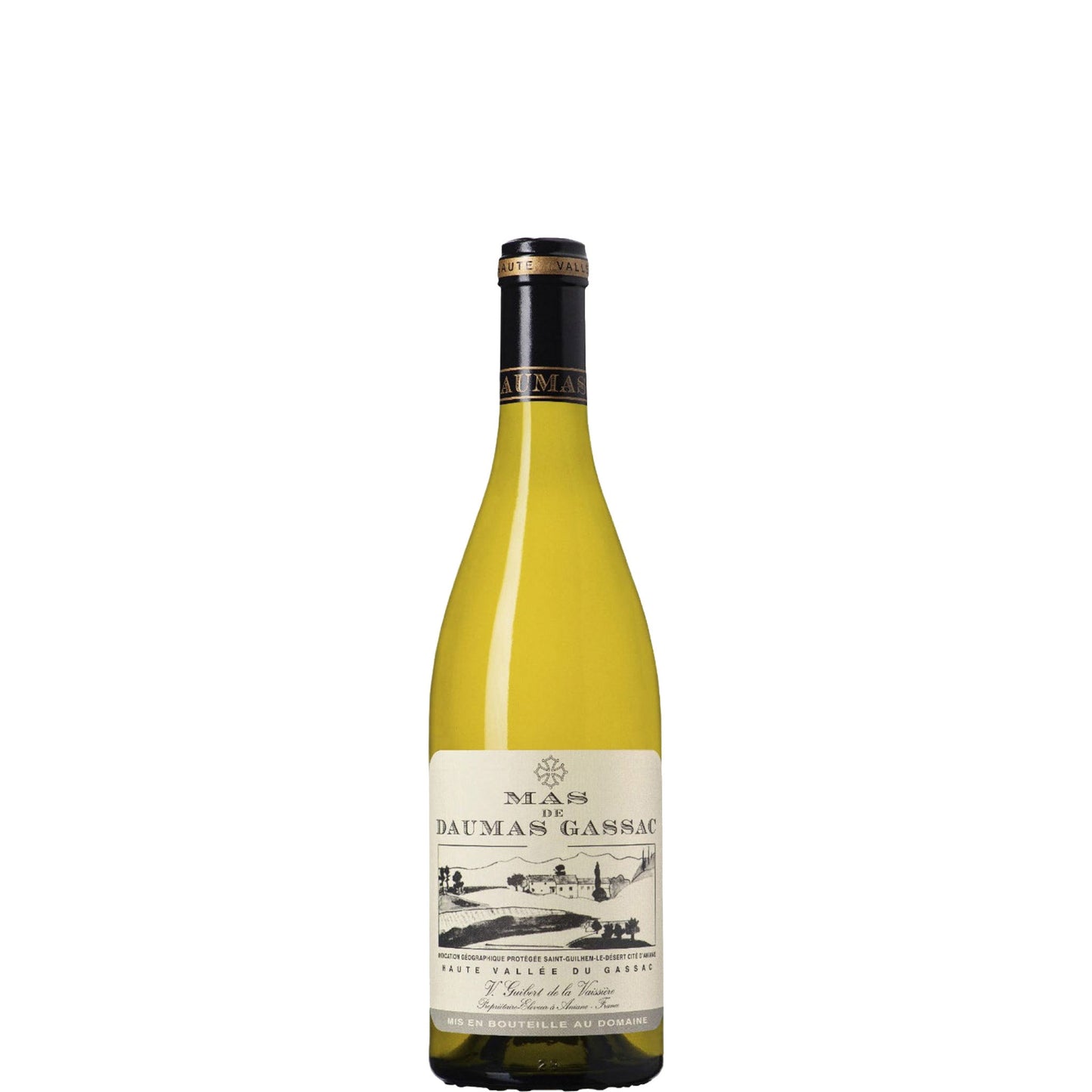
Mas De Daumas Gassac, Blanc, 2020 - Half-bottle
Mas De Daumas Gassac, Blanc, 2020 - Half-bottle
- White Still
- 37.5CL
- 13.5%
- Organic
- Chardonnay, Viognier, Petit Manseng
Couldn't load pickup availability
Mas de Daumas Gassac produces some of the most serious white wines in the Languedoc from their extraordinary terroir in the Hérault hills. Their 2020 blanc showcases the house style: a blend built around Chardonnay with Viognier, Petit Manseng, and other varietals that creates remarkable intensity and longevity. The wine emerges from high-altitude vineyards with exceptional drainage, producing concentrated fruit that demands patience.
This wine is currently in its primary phase, showing intense fruit and mineral elements that remain unintegrated and angular. Over the next 3-5 years, the tropical fruit will soften and blend with developing secondary flavours of honeyed complexity and waxy texture. The mineral backbone will remain prominent but become more seamlessly woven into the wine's structure, while tertiary development may bring subtle nutty and oxidative character around 2032-2035. The wine should reach its plateau around 2030 and maintain this level until 2035.
What the critics say:
"Pale gold. Awkward, at first – needed lots of air. (To be honest, this wine needs lots more time…) So young and unformed, but very intense. This is fisted into a white-knuckled ball of concentration, still angular, but even so, it's a kaleidoscope of layers, flavours, components. The ripeness of golden Cape gooseberries and apricots pushes through clouds of May blossom and angelica flower. Grapefruit and passion fruit, bitter-salty quinine, linden and mimosa florals, honey, wax and lime. On the finish, cardamom and white pepper and chalk linger, dry and insistent. A wine that, even in its cocoon, has weight and presence. When I taste this wine, it feels like a heavy pewter spoon, tarnished into worn beauty, cold, pressed into warm wax, laid on bronze silk. Buy this wine, tuck it into a far corner of the cellar, come back to it in three, four, five years' time. "
Tasting Notes
AppearancePale gold with brilliant clarity.
NoseInitially closed, requiring significant aeration to reveal its complexity. Golden Cape gooseberries and ripe apricots emerge through clouds of May blossom and angelica flower. Grapefruit and passion fruit weave through bitter-salty quinine, with linden and mimosa florals adding delicate perfume alongside honey, wax and lime zest.
PalateIntensely concentrated and angular in its youth, showing remarkable weight and presence despite its current restraint. The wine displays kaleidoscopic layers of flavour, with the tropical fruit ripeness balanced by mineral tension and floral complexity. Every element feels compressed into a tight ball of potential, waiting for time to unlock its full expression.
FinishCardamom and white pepper linger with chalky minerality, dry and insistent.
Overall impressionA wine of extraordinary potential that demands patience, showing the hallmarks of a great white that will reward extended cellaring.
Food Pairings
In the Languedoc, this style of white wine traditionally accompanies the region's renowned seafood dishes, particularly grilled sea bass with herbs de Provence and bouillabaisse from nearby Mediterranean ports. Local chefs pair structured whites with brandade de morue, the salt cod purée that's a regional speciality, and with roasted monkfish or John Dory prepared with garlic and local olive oil. The wine's mineral backbone complements the briny flavours of Bouzigues oysters from the nearby Étang de Thau, while its weight matches perfectly with cassoulet when a white wine is preferred over the traditional red.
We think this wine would go well with
Serve at 10-12°C in large Burgundy bowls to allow the wine's complex aromatics to develop properly. Decant 2-3 hours before serving to help integrate the currently angular components, or open the bottle the day before to allow full aeration. In its current youthful state, the wine benefits enormously from generous exposure to air, transforming from a tight, closed expression to something approaching its future glory.
The vineyard sits on 50 hectares of deep, well-drained soils in a wild valley near the abbey of Saint-Guilhem-le-Désert. Professor Henri Enjalbert identified this terroir in the 1970s as comparable to Burgundy's finest sites, with its complex geological composition providing exceptional drainage and mineral complexity. The estate's chemical-free approach preserves the soil's natural microbiome, while the valley's protected location creates ideal conditions for slow, even ripening.
Mas de Daumas Gassac operates outside traditional AOC restrictions, choosing the freedom of Vin de Pays status to craft wines according to their vision rather than regulatory constraints. This approach allows them to blend international varieties with indigenous grapes, creating wines that express their unique terroir without conforming to appellation rules. The estate's reputation has elevated the status of Languedoc wines, proving that exceptional terroir and winemaking can transcend traditional hierarchies.
The 2020 growing season in Languedoc-Roussillon brought significant challenges that ultimately shaped a vintage of surprising quality. A wet spring delayed budbreak and created disease pressure, particularly troublesome in the coastal appellations. However, a hot, dry summer allowed grapes to ripen well, though harvest began earlier than usual across the region. The key challenge came from intense heat spikes in August, which required careful canopy management and selective picking to preserve freshness in the final wines.
Despite the difficult conditions, 2020 produced wines with concentrated flavours and good structure. Syrah and Grenache performed particularly well in the hillside vineyards, developing rich, spicy character whilst maintaining decent acidity levels. Mourvèdre struggled more in the heat, though careful producers crafted some excellent examples. The reds show immediate appeal with their ripe fruit and approachable tannins, making them drinking beautifully now. Most wines from quality producers will develop well over the next 5-8 years, though the finest examples from cooler sites have the structure for longer cellaring.
FAQs
Why does this wine need so much time to develop?
The 2020 vintage shows extraordinary concentration and mineral tension that requires years to integrate. The wine's components are currently compressed and angular, needing time for the fruit, acidity, and minerality to harmonise into the complex, layered expression this terroir can produce.
How does this compare to other Languedoc whites?
Mas de Daumas Gassac operates at a completely different level from typical Languedoc whites, with terroir and winemaking that rivals Burgundy's finest sites. The wine's structure, complexity, and aging potential place it among France's most serious white wines, regardless of region.
What makes this terroir so special?
Professor Henri Enjalbert identified these soils as comparable to Burgundy's best sites, with deep, well-drained composition that provides exceptional mineral complexity. The protected valley location and chemical-free viticulture preserve the terroir's natural expression.
Should I decant this wine?
Yes, definitely. The wine is extremely tight in its current state and transforms dramatically with 2-3 hours of decanting. Some tasters prefer opening it the day before serving to allow maximum aeration and integration.
How will the half-bottle format affect aging?
Half-bottles typically develop more quickly due to the higher ratio of oxygen to wine, so expect this to reach maturity 1-2 years earlier than full bottles. The drinking window may shift to 2028-2033 for optimal development.
What grape varieties are in this blend?
While the estate doesn't always specify exact percentages, the blend typically includes Chardonnay for structure, Viognier for aromatics, and Petit Manseng for acidity and aging potential, creating a unique expression of their exceptional terroir.
-
Free UK Delivery
Learn about deliveryGet free UK delivery when you spend £75 or more on duty paid wine
-
Save 30% on a host of quality wines
Our fine wines are sourced from our sister retailers, but offered at a substantial discount to their previous selling prices.
- Choosing a selection results in a full page refresh.
- Opens in a new window.