

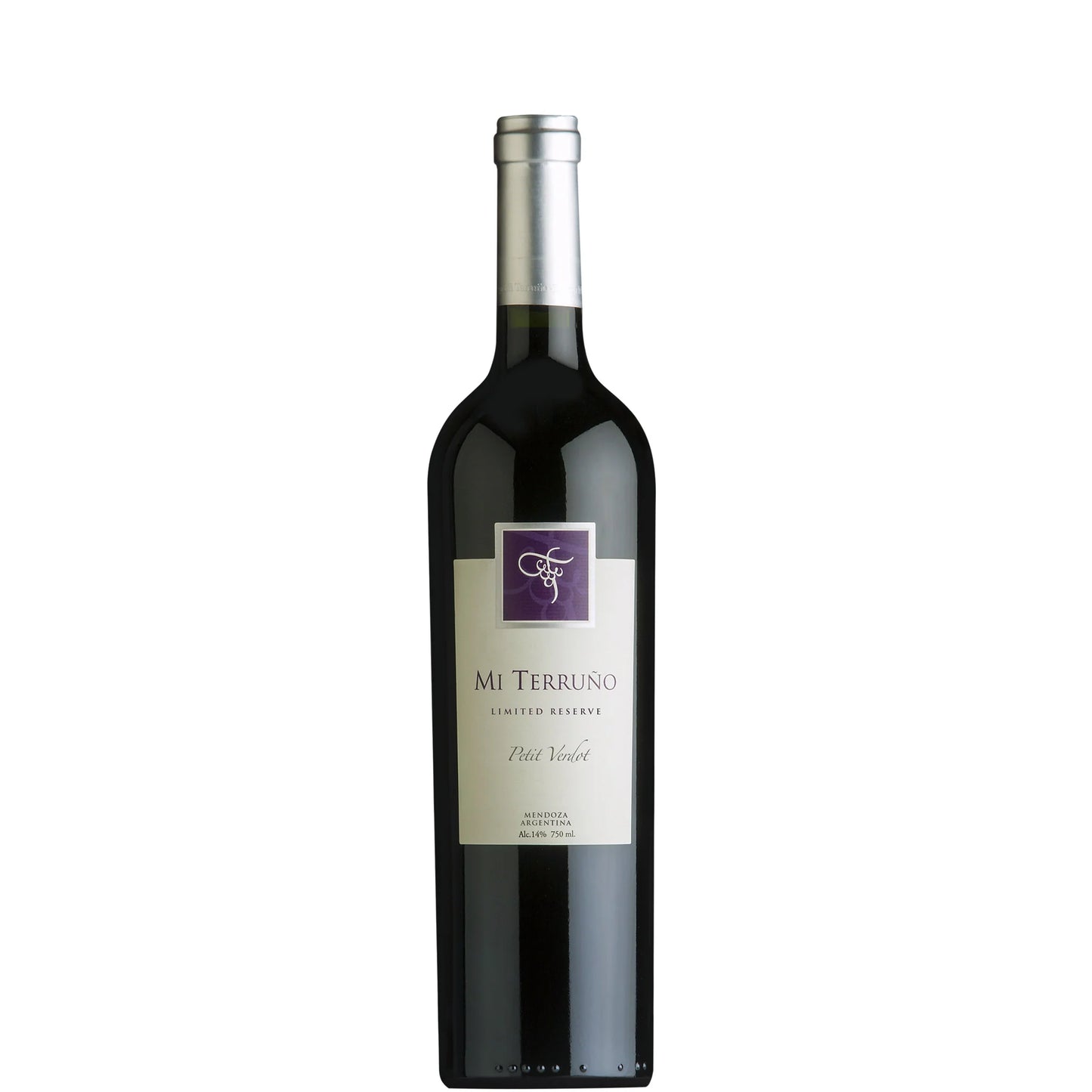
Mi Terruno, Petit Verdot Limited Reserve, 2016
Mi Terruno, Petit Verdot Limited Reserve, 2016
- Red Still
- 75CL
- 13.5%
- Petit Verdot
Couldn't load pickup availability
A bold yet refined red built for meat, Mi Terruno's Petit Verdot Limited Reserve shows a deep ruby hue with violet edges. The bouquet is complex and evolving, with ripe plums, black raspberry and hints of mocha, revealing new layers with every sniff.
On the palate, this wine is smooth yet robust, with velvety tannins and a subtle nutty character from barrel maturation. Made from handpicked grapes in Mendoza’s Perdriel and Luján de Cuyo regions, the fruit was de-stemmed, crushed and cold-macerated to maximise colour and fruit character, then fermented for 15 days in stainless steel. After malolactic fermentation, it was aged for 10 months in French oak, resulting in a structured and elegant red.
At ten years old, it is entering its prime drinking window with primary fruit flavours beginning to integrate with oak influences. Over the next 2-3 years, expect the tannins to soften further while maintaining the wine's structural backbone. Secondary complexity will emerge gradually, with leather and earth nuances developing alongside the existing dark fruit character. The wine should hold well until the mid-2030s before beginning a gentle decline.
Tasting Notes
AppearanceDeep ruby with violet edges, showing the varietal's characteristic dark intensity.
NoseRipe plums and black raspberry dominate initially, followed by mocha and dark chocolate from oak integration. The aromatics evolve in the glass, revealing layers of spice and subtle violet florals typical of well-made Petit Verdot.
PalateSmooth yet robust with velvety tannins that provide structure without overwhelming the fruit. The 10-month French oak maturation contributes a subtle nutty character that complements rather than masks the varietal intensity. Dark fruit flavours persist through the mid-palate with well-integrated acidity.
FinishLong and structured, with lingering dark fruit and gentle oak spice.
Overall impressionA well-balanced expression of Petit Verdot that demonstrates both power and elegance.
Food Pairings
In Mendoza, wines like this typically accompany asado barbecues featuring thick cuts of beef cooked over wood fires. Local favourites include bife de chorizo and entraña, often served with chimichurri and roasted vegetables. The wine also pairs beautifully with regional specialities like locro stew and empanadas filled with spiced meat. Mendozan dining emphasises bold, flame-grilled flavours that complement Petit Verdot's intensity.
We think this wine would go well with
Serve at 16-18°C to allow the fruit and structure to show properly. Decant for 30-60 minutes to soften the tannins and open the aromatics. Use large Bordeaux glasses to concentrate the aromatics while providing adequate surface area for aeration. The wine benefits from this breathing time, particularly if drinking now rather than cellaring further.
The grapes come from Mendoza's Perdriel and Luján de Cuyo regions, two of Argentina's most prestigious wine zones. These areas sit at optimal altitudes with well-draining alluvial soils and dramatic diurnal temperature shifts. The continental climate with Andean influence allows Petit Verdot to ripen fully while retaining natural acidity and developing the variety's characteristic intensity.
Mendoza produces over 70% of Argentina's wine, with Perdriel and Luján de Cuyo representing the region's historic heart. These districts benefit from ancient river deposits and proximity to the Andes, creating ideal conditions for Bordeaux varieties. Luján de Cuyo holds Argentina's first DOC status, recognising its exceptional terroir for premium red wine production.
The 2016 vintage in Mendoza benefited from a return to more balanced growing conditions after several challenging years. The season began with adequate winter rainfall that replenished soil moisture, followed by a relatively cool spring that encouraged steady vine development. Summer temperatures remained within optimal ranges, particularly crucial for high-altitude vineyards in Luján de Cuyo and the Uco Valley. Harvest timing proved well-judged across most elevations, with growers able to pick at ideal ripeness levels without the rush imposed by extreme heat or unexpected rainfall.
This vintage produced wines of considerable quality and balance, particularly for Malbec, which showed the depth and structure that characterises Mendoza's finest expressions of the variety. Cabernet Sauvignon and Merlot also performed admirably, displaying good concentration without excessive alcohol levels. The wines generally show excellent fruit purity with well-integrated tannins and natural acidity. Most 2016 Mendoza reds are drinking beautifully now and will continue to develop over the next decade, with premium bottlings from top producers having the structure for longer cellaring.
FAQs
What makes Petit Verdot distinctive as a grape variety?
Petit Verdot is traditionally a Bordeaux blending grape known for intense colour, firm tannins, and spicy character. As a single varietal, it produces powerful, age-worthy wines with distinctive violet and dark fruit flavours. Argentine examples often show more approachable tannins due to the warmer climate allowing fuller ripening.
How does this compare to other Argentine red wines?
This Petit Verdot offers more structure and spice than typical Argentine Malbec, with firmer tannins and different aromatics. It sits between Malbec's plush fruit and Cabernet Sauvignon's herbaceous notes, providing a distinctive middle ground with excellent food-pairing versatility.
Is this wine ready to drink now?
Yes, the 2016 vintage is drinking beautifully now after a decade of development. The tannins have softened considerably while the wine retains its fruit intensity. It will continue to evolve gracefully for another 8-10 years if properly stored.
What's the significance of the Perdriel and Luján de Cuyo regions?
These are among Mendoza's most prestigious wine zones, with Luján de Cuyo holding Argentina's first DOC status. Both benefit from optimal altitude, ancient alluvial soils, and proximity to the Andes. They're particularly renowned for producing structured, age-worthy red wines from Bordeaux varieties.
How should I store this wine for further ageing?
Store horizontally in a cool, dark place at 12-15°C with consistent humidity around 70%. Avoid temperature fluctuations and vibration. The wine has good ageing potential for another 8-10 years if storage conditions are optimal.
What food pairings work best with this style?
The wine's structure and intensity pair excellently with grilled red meats, game, and rich stews. Try it with lamb, venison, or mature beef dishes. The tannins also work well with aged hard cheeses and dishes featuring mushrooms or herbs.
-
Free UK Delivery
Learn about deliveryGet free UK delivery when you spend £75 or more on duty paid wine
-
Save 30% on a host of quality wines
Our fine wines are sourced from our sister retailers, but offered at a substantial discount to their previous selling prices.