

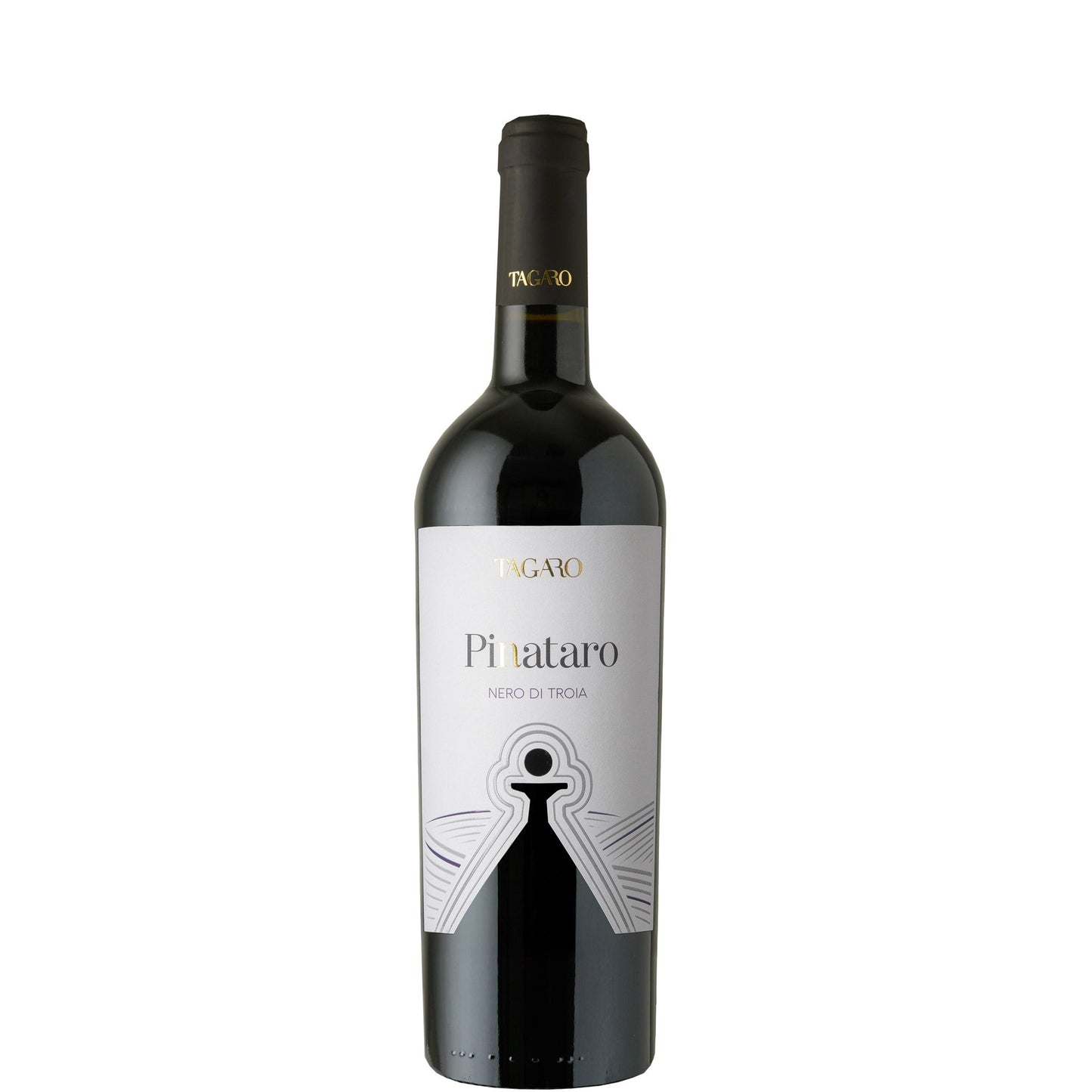
Tagaro, Pinataro Nero di Troia, 2023
Tagaro, Pinataro Nero di Troia, 2023
- Red Still
- 75CL
- 14%
- Nero di Troia
Couldn't load pickup availability
Tagaro Pinataro's 2023 Nero di Troia represents the essence of Puglia's indigenous red grape, delivering the concentrated power and rustic character that makes this variety so compelling. Nero di Troia, also known as Uva di Troia, thrives in the hot, dry climate of southern Italy, producing wines of notable structure and regional authenticity.
The 2023 vintage shows the typical intensity of this grape: dark berry fruit balanced by firm tannins and earthy Mediterranean herbs. Best enjoyed now until 2030, this wine captures the sun-baked terroir of Puglia whilst maintaining the freshness that makes modern expressions of traditional southern Italian varieties so appealing to contemporary palates.
The 2023 vintage is approaching its optimal drinking period, with primary dark fruit flavours beginning to integrate with earthy secondary character. Over the next two years, the tannins will continue to soften whilst the herbal complexity becomes more pronounced. The wine should hold its concentration and structure through 2030, though the fresh fruit character will gradually give way to more evolved, earthy flavours. This style of Nero di Troia is best enjoyed whilst retaining its youthful vigour rather than extended cellaring.
Tasting Notes
AppearanceDeep ruby red with purple highlights, showing good concentration and youth.
NoseIntense dark berry aromas dominate, with blackberry and plum at the forefront. Mediterranean garrigue adds herbal complexity, whilst subtle spice and earthy minerals provide depth. The nose shows the variety's characteristic power without excessive extraction.
PalateFull-bodied with firm but approachable tannins that frame concentrated dark fruit flavours. The palate reveals layers of blackberry, dried herbs, and a distinctive earthy minerality typical of Puglia's limestone soils. Balanced acidity keeps the wine fresh despite its southern warmth and intensity.
FinishLong and satisfying, with lingering dark fruit and herb flavours supported by well-integrated tannins.
Overall impressionAn authentic expression of Nero di Troia that balances rustic power with modern drinkability.
Food Pairings
In Puglia, Nero di Troia traditionally accompanies the region's robust cuisine, particularly grilled lamb with wild herbs and orecchiette pasta with sausage ragu. The wine pairs beautifully with local specialities like braised horse meat (though increasingly rare) and hearty stews featuring local vegetables and legumes. Aged cheeses from the region, including sharp pecorino and creamy burrata, complement the wine's structure, whilst grilled meats seasoned with rosemary and thyme echo the wine's herbal character.
We think this wine would go well with
Serve at 16-18°C to allow the fruit and herbal complexity to express fully. Decanting for 30-60 minutes will help integrate the tannins and open the aromatics. Use large Burgundy glasses to concentrate the intense aromatics whilst providing adequate surface area for the wine to breathe. No extended cellaring required as this wine is designed for current enjoyment.
The vineyards benefit from Puglia's limestone-rich soils and hot, dry Mediterranean climate. The combination of intense sunshine and cooling sea breezes from both the Adriatic and Ionian coasts creates ideal conditions for Nero di Troia. These calcareous soils provide excellent drainage whilst retaining enough moisture to support the vines through the long, hot summers. The terroir contributes to the wine's characteristic concentration and mineral backbone.
Puglia DOC encompasses Italy's heel region, known for its ancient winemaking traditions and indigenous grape varieties. The appellation permits both traditional and international varieties, but producers like Tagaro Pinataro focus on native grapes like Nero di Troia to express regional authenticity. Puglia's reputation has evolved from bulk wine production to quality-focused viticulture, with Nero di Troia leading this renaissance as one of southern Italy's most characterful red varieties.
The 2023 growing season in Puglia began promisingly with adequate winter rainfall replenishing soil moisture levels across the region's sun-baked vineyards. Spring brought typical Mediterranean conditions, though growers faced challenges from periodic intense heat spells during the crucial flowering period. Summer proved demanding with sustained high temperatures, particularly affecting inland areas around Salento and the Murge plateau, where careful canopy management became essential to protect fruit quality. The harvest commenced earlier than usual, with producers prioritising night picking to preserve the natural acidity that gives Puglian wines their backbone.
Despite the climatic pressures, 2023 delivered wines of considerable merit across Puglia's diverse terroir. Primitivo responded well to the concentrated conditions, producing deeply coloured wines with ripe fruit character and good structure, though alcohol levels required careful monitoring. Negroamaro proved particularly resilient, yielding wines with excellent colour intensity and the variety's characteristic spicy complexity. The vintage favours early to medium-term drinking, with most reds showing approachable tannins and forward fruit that will drink beautifully over the next 5-8 years, while the best examples from top producers should cellar gracefully into the early 2030s.
FAQs
What makes Nero di Troia distinctive from other Italian red grapes?
Nero di Troia is indigenous to southern Italy and produces wines with distinctive herbal character and firm structure. Unlike Sangiovese or Nebbiolo, it thrives in hot climates and delivers immediate power rather than requiring extended aging.
How does this wine compare to other Puglian reds like Primitivo?
Whilst Primitivo tends towards ripe, jammy fruit, Nero di Troia maintains more herbal complexity and firmer tannins. This variety offers a more structured, less overtly fruity style that better reflects Puglia's Mediterranean terroir.
Should I decant this wine?
Yes, 30-60 minutes of decanting will help integrate the tannins and allow the aromatics to open fully. The wine benefits from breathing time to show its best character.
What food pairings work best with this style?
The wine excels with grilled and roasted meats, particularly lamb and beef prepared with Mediterranean herbs. Pasta with meat sauces and aged cheeses also complement the wine's structure and earthy character.
How long will this wine keep once opened?
The wine's good structure and moderate tannins allow it to maintain quality for 2-3 days once opened, provided it's properly re-corked and stored in a cool place.
Is this wine suitable for cellaring?
This wine is designed for current enjoyment rather than extended cellaring. Whilst it will remain stable until 2030, it's best consumed whilst retaining its fresh fruit character and youthful vigour.
-
Free UK Delivery
Learn about deliveryGet free UK delivery when you spend £75 or more on duty paid wine
-
Save 30% on a host of quality wines
Our fine wines are sourced from our sister retailers, but offered at a substantial discount to their previous selling prices.