

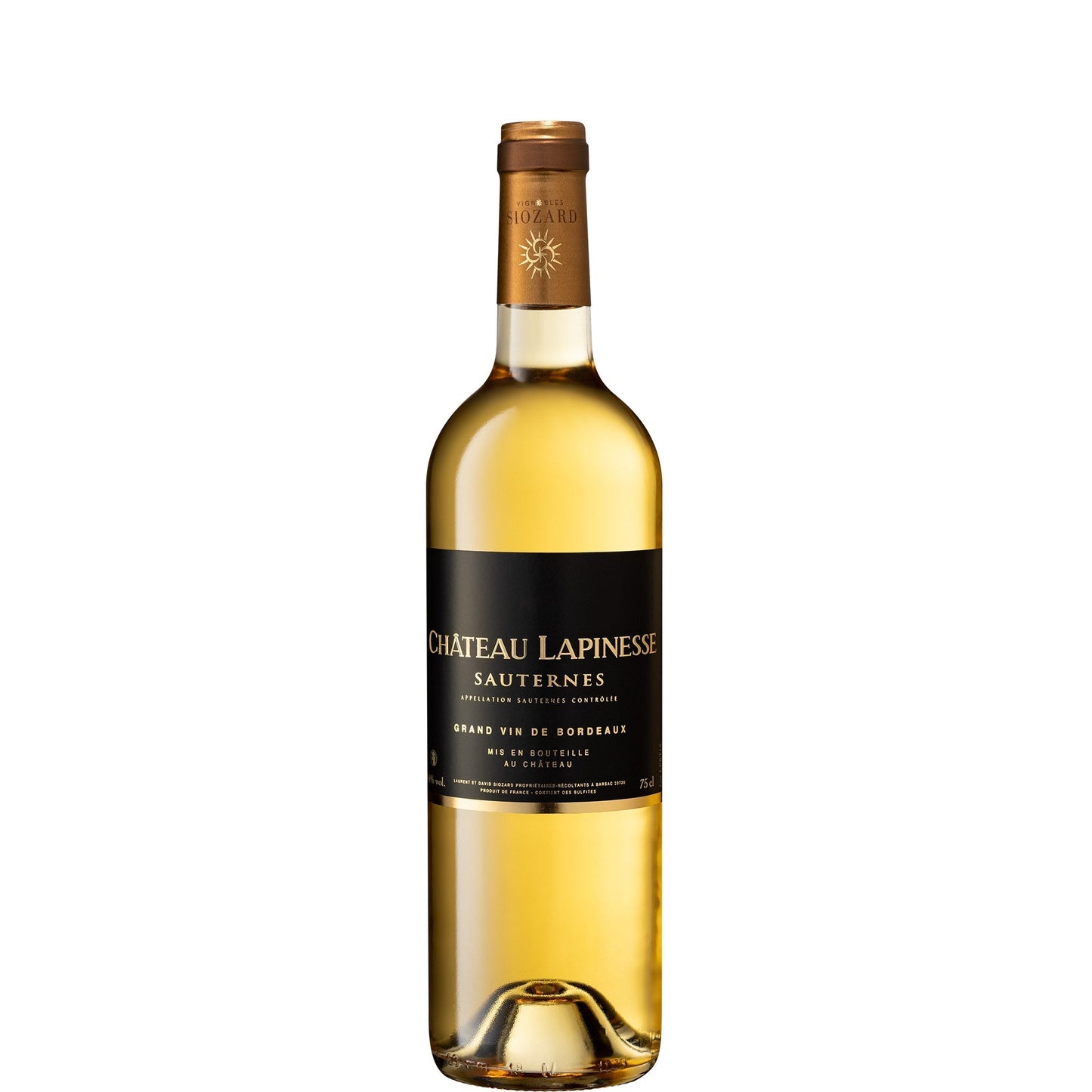
Vignobles Siozard, Château Lapinesse Sauternes, 2018
Vignobles Siozard, Château Lapinesse Sauternes, 2018
- Dessert
- 75CL
- 13.5%
- Sémillon, Sauvignon Blanc, Muscadelle
Couldn't load pickup availability
This Sauternes from the expert minds at Siozard is hand-harvested and pressed at their sustainable vineyard on the left bank of Bordeaux. Bright gold in colour with aromas of white jasmine and candied fruits, this is a delicate and sweet wine boasting ripe melon, quince and summer stone fruit flavour.
The 2018 vintage is drinking beautifully now with primary fruit flavours well-integrated and botrytis character fully developed. Over the next 3-5 years, expect honeyed richness to increase whilst maintaining fresh acidity. It should reach its optimal drinking window around 2028-2032 when tertiary flavours of dried fruits and nuts emerge. Beyond 2035, the wine may begin to lose some freshness though well-stored bottles can age gracefully until 2038.
Tasting Notes
AppearanceBright golden colour with excellent clarity and viscosity indicating good concentration.
NoseWhite jasmine florals lead, followed by candied citrus peel and dried apricot. Honeyed richness emerges with air, alongside subtle spice from botrytis development. The aromatics show typical Sauternes elegance without being overpowering.
PalateRipe melon and quince dominate the entry, balanced by fresh acidity that prevents cloying sweetness. Summer stone fruits—particularly peach and apricot—develop mid-palate. The texture remains delicate despite the natural sweetness, showing good integration of alcohol and sugar.
FinishClean finish with lingering stone fruit and a touch of honeyed richness.
Overall impressionA well-made Sauternes displaying classic varietal character with elegant restraint rather than power.
Food Pairings
In Bordeaux, Sauternes traditionally accompanies foie gras at the start of special meals, the wine's acidity cutting through the liver's richness. Local pâtissiers pair it with canelés, the caramelised custard cakes from nearby Bordeaux city, or with fruit tarts featuring regional plums and pears. Roquefort cheese from southern France often appears on Bordelais tables alongside Sauternes, the salty blue cheese creating a classic contrast. For festive occasions, locals serve it with tarte Tatin made from local apples.
We think this wine would go well with
Serve well-chilled at 6-8°C in smaller white wine glasses to concentrate the aromatics without overwhelming the palate. No decanting required as this style benefits from direct service from bottle. Allow the wine to warm slightly in the glass to reveal its full aromatic complexity. Pour smaller measures of around 75ml given the wine's richness and 13.5% alcohol content.
Château Lapinesse sits within the Sauternes appellation on Bordeaux's left bank, where morning mists from the Ciron and Garonne rivers create ideal conditions for noble rot. The gravelly soils provide excellent drainage whilst retaining enough moisture to support the extended ripening period. This microclimate allows botrytis cinerea to concentrate sugars and develop the complex flavours characteristic of great Sauternes.
Sauternes produces the world's most celebrated dessert wines from botrytis-affected grapes, primarily Sémillon with Sauvignon Blanc and Muscadelle. The appellation demands minimum residual sugar levels of 45g/L and yields are naturally low due to the selective harvesting required. Sauternes commands higher prices than neighbouring sweet wine regions like Cérons or Cadillac due to its superior terroir and stricter production standards.
The 2018 growing season in Bordeaux began with a wet winter that replenished water reserves, followed by a warm, dry spring that encouraged early flowering. Summer brought sustained heat and drought conditions, particularly intense in July, which stressed the vines and concentrated flavours in the berries. A brief period of rain in late August provided welcome relief before harvest began in generally dry conditions from mid-September. The combination of water stress and careful vineyard management resulted in naturally low yields and excellent concentration.
This produced wines of remarkable depth and intensity across both banks. Cabernet Sauvignon thrived in the heat, delivering structured, powerful wines with excellent colour and tannin concentration, particularly benefiting the Left Bank estates. Merlot performed well where water stress was managed carefully, though some Right Bank properties saw reduced yields. The vintage displays classic Bordeaux character with firm structure and aging potential, though the wines remain quite closed in their youth. Most 2018 Bordeaux will benefit from cellaring until at least 2028-2030, with the finest examples likely to reward patience well beyond that.
FAQs
How long will this Sauternes keep once opened?
Sweet wines like Sauternes keep much longer than dry wines once opened. Store in the refrigerator with a proper wine stopper and this bottle should remain fresh for 7-10 days, sometimes longer due to the natural preservative effect of residual sugar and higher alcohol.
What makes Sauternes different from other dessert wines?
Sauternes requires botrytis cinerea (noble rot) to concentrate sugars and develop complex flavours. This fungus only develops under specific climatic conditions found in the Sauternes region. The appellation also mandates strict yield limits and minimum sugar levels that many other sweet wine regions do not enforce.
Is this wine suitable for cellaring?
Yes, though this 2018 is already drinking well. Quality Sauternes can age for decades, developing honeyed complexity and deeper golden colour. Store on its side in a cool, dark place at consistent temperature. This bottle should drink beautifully until 2038 with proper storage.
What's the ideal serving size for Sauternes?
Pour 75-100ml measures rather than standard 125ml wine servings. The richness and 13.5% alcohol mean smaller portions are more appropriate and allow guests to savour the wine's complexity without palate fatigue. A 375ml half-bottle typically serves 4-5 people comfortably.
Can I cook with Sauternes?
Sauternes works excellently in cooking, particularly with foie gras, in fruit desserts, or reduced as a sauce for duck or pork. The wine's acidity and fruit character intensify when reduced. However, given the quality, reserve cooking wine for bottles that are past their prime or use more affordable sweet wines for regular cooking.
Why is this wine more expensive than other dessert wines?
Sauternes production involves significant risk and labour. Grapes must be hand-picked multiple times through the vineyard as botrytis develops unevenly. Yields are naturally low, sometimes producing only one glass of wine per vine. The lengthy production process and uncertain harvests due to weather dependency drive higher costs compared to fortified or late-harvest wines.
-
Free UK Delivery
Learn about deliveryGet free UK delivery when you spend £75 or more on duty paid wine
-
Save 30% on a host of quality wines
Our fine wines are sourced from our sister retailers, but offered at a substantial discount to their previous selling prices.