

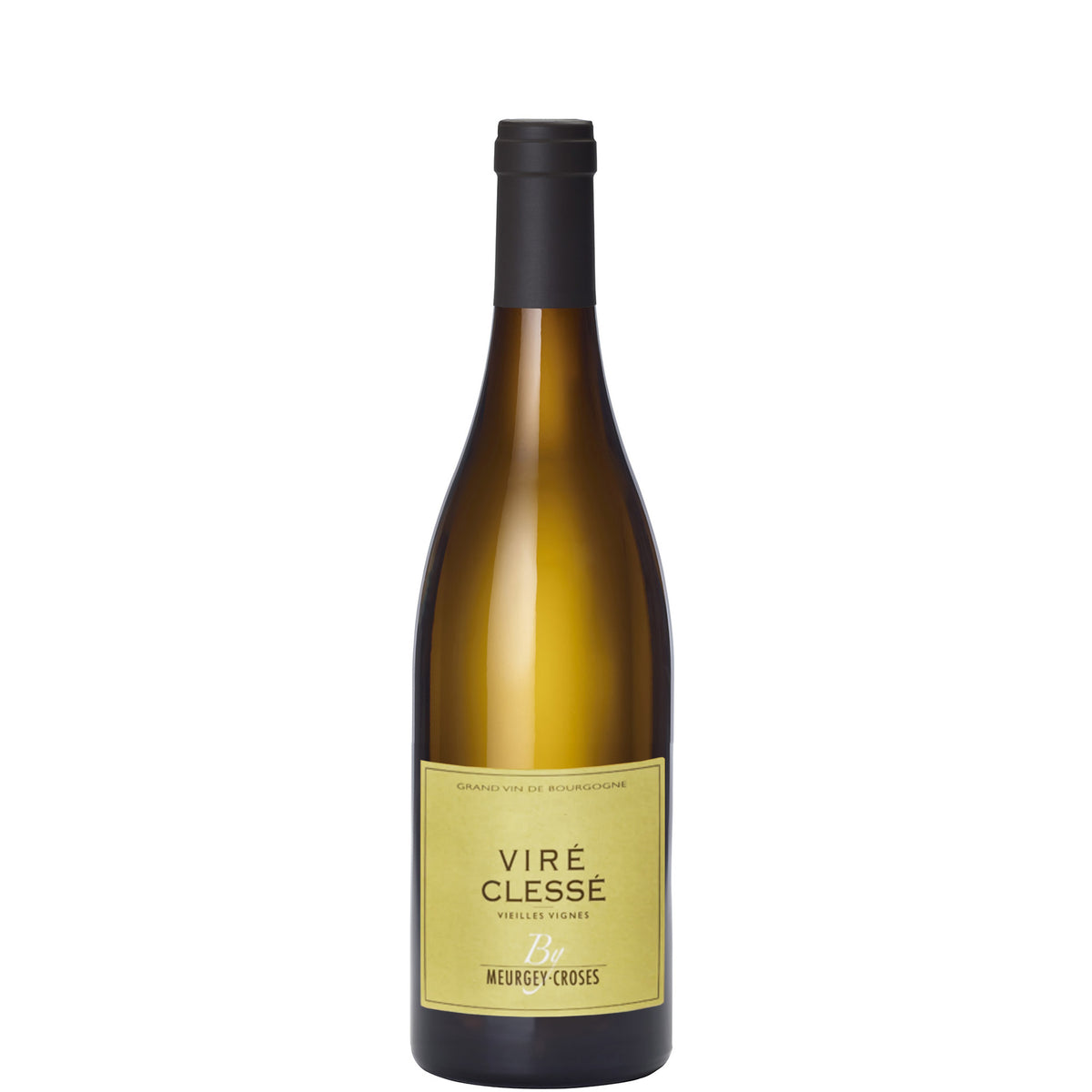
Viré-Clessé Vieilles Vignes, Meurgey-Croses, 2023
Viré-Clessé Vieilles Vignes, Meurgey-Croses, 2023
- White Still
- 75CL
- 14%
- Chardonnay
Couldn't load pickup availability
Viré-Clessé sits in the Mâconnais, just north of Pouilly-Fuissé, and Meurgey-Croses is among the appellation's most dependable producers.
"Very vinous on the palate, but the saline mineral thread provides the backbone. An attractive Vire-Clessé for the medium term."
Jasper Morris, Inside Burgundy
This Vieilles Vignes cuvée draws from old Chardonnay vines whose restricted yields produce concentrated, textured fruit rather than the looser, more dilute character that can afflict younger-vine Mâcon. The 2023 vintage brought generous sunshine and well-timed rainfall, giving the Mâconnais a particularly ripe yet well-balanced growing season — ideal conditions for this style of wine.
In the glass, this is a step up from everyday white Burgundy: there is real weight and persistence, with stony mineral character framing ripe orchard fruit and a touch of oak-derived creaminess.
In 2026, the 2023 vintage is approachable and already showing well, with primary fruit and oak in good balance. Over the next two to three years, the oak will integrate further, and secondary characteristics — toasted brioche, beeswax, and a deeper mineral quality — should emerge. The wine is likely to reach its peak somewhere around 2028 to 2030, when acidity, fruit, and texture are at their most harmonious.
Tasting Notes
AppearancePale gold with a faint green rim, clear and bright.
NoseWhite peach and ripe pear open first, followed by toasted almond and a subtle lick of vanilla from oak ageing. A chalky, stony quality runs beneath the fruit, keeping the nose focused and clean.
PalateMedium-full bodied with a creamy texture that coats the palate without heaviness. Ripe citrus — lemon curd rather than fresh lemon — anchors the mid-palate, with nectarine and a thread of hazelnut adding depth. The acidity is present and precise, providing freshness and structure.
FinishLong and mineral, with a saline, almost oyster-shell quality that lingers well after the fruit fades.
Overall impressionA confident, characterful Mâconnais Chardonnay that punches well above the price point of most white Burgundy.
Food Pairings
In the Mâconnais, this style of wine is the natural companion to the region's freshwater fish — pike quenelles in a rich beurre blanc or pan-fried perch with browned butter are classic matches. Locals also pair it with the soft, bloomy rind cheeses of nearby Bresse, particularly when served at room temperature with good bread. Poulet de Bresse, the celebrated AOC chicken of the area, roasted simply with tarragon and cream, is perhaps the most natural pairing of all. Warm goat's cheese on lentil salad — a staple of Lyon's bouchon culture just to the north — also works well with the wine's mineral edge.
We think this wine would go well with
Serve at 11–13°C: cold enough to preserve freshness but not so cold that it suppresses the textural weight and aromatic complexity. A standard white Burgundy tulip glass — wide enough to allow the wine to open but not so large that it dissipates — is ideal. Decanting is not necessary, but pouring 20–30 minutes before serving and allowing the wine to warm slightly in the glass will reveal more of the creamy, stony mid-palate character.
The vineyards of Viré-Clessé sit on Jurassic limestone and clay soils, with the best sites oriented to the south and south-east for maximum sun exposure during the ripening period. The altitude — broadly 250 to 350 metres — ensures cooler nights that preserve natural acidity, preventing the wine from tipping into flabbiness despite the warmth of southern Burgundy. Old vines in this context mean deeper root systems that draw mineral character from the bedrock, contributing the saline, stony quality that distinguishes a vieilles vignes bottling from a standard cuvée.
Viré-Clessé was awarded its own AOC in 1999, carved out of the broader Mâcon-Villages designation to recognise the consistently superior quality of wines from these two villages. The appellation covers only white Chardonnay and enforces lower maximum yields than generic Mâcon, which contributes to the greater concentration and longevity found in the best bottles. Compared to its more famous neighbour Pouilly-Fuissé to the south, Viré-Clessé tends to produce wines that are slightly fuller in body but equally mineral-driven, and they remain significantly better value for money.
The 2023 growing season in Burgundy presented winemakers with a complex set of challenges that demanded careful vineyard management. Spring brought concerns over frost risk, though the region largely escaped the devastating damage seen in recent years. Summer heat and periodic drought stress tested the vines, particularly affecting yields in some sectors. The harvest began earlier than historical averages, with growers working swiftly to capture optimal ripeness while maintaining the essential acidity that defines great Burgundy.
This vintage has produced wines of genuine quality, though quantities remain modest across many appellations. Pinot Noir shows excellent colour concentration with well-defined fruit character, while Chardonnay displays the tension and minerality that collectors prize. The wines exhibit good structure and balance, suggesting they will reward cellaring. Most 2023 Burgundies will benefit from three to five years in the cellar before reaching their drinking window, with the finest cuvées likely to develop beautifully over the next decade or more.
FAQs
How does this compare to a village-level Pouilly-Fuissé?
Viré-Clessé and Pouilly-Fuissé are near neighbours and share similar limestone terroirs, so the comparison is fair. Pouilly-Fuissé — particularly at premier cru level — can achieve greater depth and a more commanding structure, but a vieilles vignes Viré-Clessé like this one sits comfortably alongside most standard Pouilly-Fuissé bottlings at a more competitive price. The key difference is often less about quality and more about the name on the label.
Is this wine suitable for cellaring?
Yes, though it is not a long-distance wine. The combination of old-vine concentration, good natural acidity from the 2023 vintage, and restrained oak means it will develop well until around 2030–2033. Beyond that, the fruit is unlikely to sustain further ageing. If you are cellaring, keep bottles at a consistent 12–14°C away from light and vibration.
What does "Vieilles Vignes" mean in practice?
There is no legal definition of vieilles vignes in Burgundy — producers use the term at their own discretion. In practice at a conscientious domaine like Meurgey-Croses, it signals vines typically over 40 years old whose naturally lower yields produce more concentrated, complex fruit than younger plantings. The result is usually more texture, greater mineral definition, and better ageing potential.
Would this work as a wine for a dinner party or special occasion?
Absolutely. It sits in a sweet spot: serious enough to impress guests familiar with white Burgundy, but approachable enough for those who are not. It works well as an aperitif alongside light canapés, and holds its own through a fish or poultry course. A single bottle will satisfy four guests comfortably through a starter and main course.
What is the 2023 vintage like in the Mâconnais?
The 2023 growing season in Burgundy was characterised by a warm, dry summer with well-timed rainfall in August — conditions that allowed grapes to ripen fully while retaining acidity. In the Mâconnais, this translated into wines with generous ripe fruit alongside freshness and precision. It is regarded as an excellent vintage for white Mâconnais wines, producing bottles with both immediate appeal and genuine ageing potential.
What glass shape works best for this wine?
A standard white Burgundy or Chardonnay glass — a tulip shape with a medium-wide bowl — is the right choice. It concentrates the mineral and creamy aromatic character without over-aerating the wine. Avoid overly large Montrachet-style bowls for a wine at this weight, as they can make it seem thinner than it is.
-
Free UK Delivery
Learn about deliveryGet free UK delivery when you spend £75 or more on duty paid wine
-
Save 30% on a host of quality wines
Our fine wines are sourced from our sister retailers, but offered at a substantial discount to their previous selling prices.