

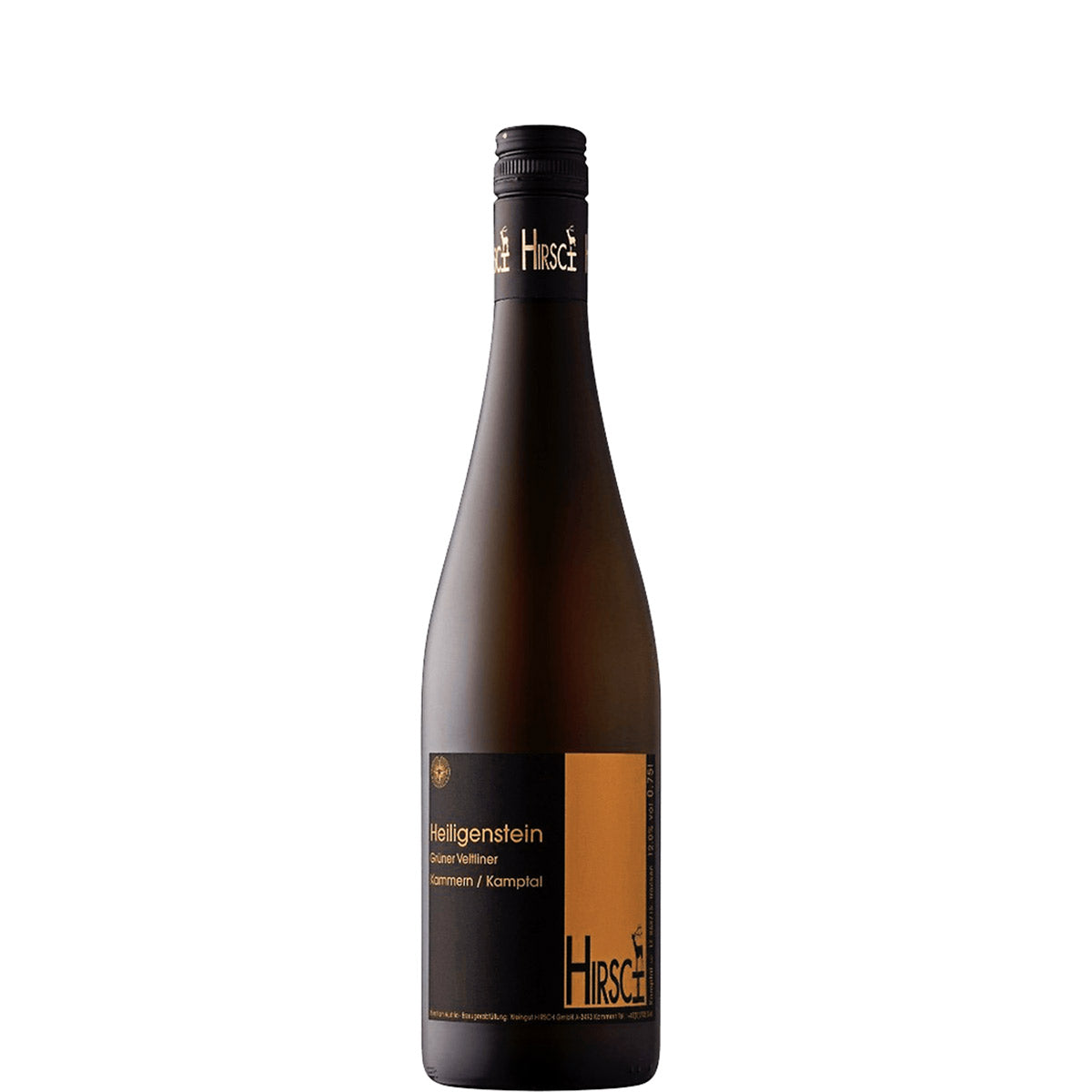
Weingut Hirsch, Heiligenstein Grüner Veltliner, 2014
Weingut Hirsch, Heiligenstein Grüner Veltliner, 2014
- White Still
- 75CL
- 12.5%
- Grüner Veltliner
Couldn't load pickup availability
Johannes Hirsch farms some of Austria's most prized Grüner Veltliner vineyards in the Kamptal, where his Heiligenstein bottling represents the pinnacle of site-specific Austrian white winemaking. The Heiligenstein vineyard sits on ancient volcanic soils that impart distinctive minerality and remarkable longevity to Grüner Veltliner.
This 2014 vintage has reached its drinking window, showing the classic Hirsch combination of citrus precision, white pepper spice, and savoury complexity that makes this one of Austria's most celebrated terroir expressions.
This 2014 vintage has moved beyond its primary citrus phase into secondary development, where honeyed richness begins to complement the classic spice and mineral core. The wine will continue developing complexity over the next few years as tertiary aromatics emerge, though it should be consumed by 2030 to capture its peak expression. Expect the mineral backbone to remain constant while fruit flavours gradually evolve from citrus toward more golden fruit character.
Tasting Notes
AppearancePale gold with brilliant clarity and excellent viscosity suggesting concentration and maturity.
NoseIntense citrus zest and green apple combine with distinctive white pepper spice and wet stone minerality. Subtle herbal elements emerge with time, along with a hint of honey that speaks to the wine's development.
PalateCrystalline precision on entry with concentrated citrus fruit and pronounced minerality from the volcanic soils. The classic Grüner Veltliner spice builds through the mid-palate, balanced by vibrant acidity and excellent textural weight.
FinishLong and savoury with persistent spice, citrus zest, and distinctive mineral character that defines great Kamptal terroir.
Overall impressionA masterful expression of Heilegenstein terroir that demonstrates why Hirsch ranks among Austria's finest producers.
Food Pairings
In the Kamptal region, locals pair aged Grüner Veltliner with traditional Austrian dishes like Wiener Schnitzel, where the wine's acidity cuts through the rich breading and its spice complements the delicate veal. Freshwater fish from the nearby Danube, particularly pike-perch prepared with herbs and butter, creates an ideal match with the wine's mineral backbone. The classic pairing remains Tafelspitz, Austria's beloved boiled beef served with horseradish and apple sauce, where the Grüner's savoury spice and bright acidity enhance both the meat's richness and the condiments' sharpness.
We think this wine would go well with
Serve at 10-12°C in a large Burgundy glass to allow the wine's complex aromatics to develop fully. No decanting required, but allow 30 minutes in the glass for optimal expression. The wine benefits from generous glassware that concentrates its mineral and spice characteristics while providing adequate surface area for the mature fruit to emerge.
The Heilegenstein vineyard sits on volcanic rock and primary rock soils with deposits of loess, creating ideal drainage while retaining essential moisture. Located on steep south-facing slopes above the Danube valley, the site benefits from excellent sun exposure and cooling winds that preserve acidity. These ancient volcanic soils impart the distinctive mineral backbone and spicy character that defines great Kamptal Grüner Veltliner.
Kamptal DAC represents one of Austria's most prestigious wine regions, specialising in Grüner Veltliner and Riesling from exceptional terroir. The appellation's strict regulations ensure only the finest sites and traditional winemaking methods qualify for DAC status. Kamptal's combination of volcanic soils, continental climate, and skilled producers like Hirsch has established it as Austria's premier region for age-worthy Grüner Veltliner that rivals the world's greatest white wines.
The 2014 growing season in Niederösterreich proved challenging, with a cool, wet summer testing growers' patience and vineyard management skills. Heavy rainfall through July and August created pressure from fungal diseases, particularly in the Danube valley appellations, forcing producers to work meticulously in both vineyard and cellar. However, a crucial dry spell in September allowed healthy grapes to ripen properly, rewarding those who had managed their canopies well and maintained low yields throughout the difficult months.
While 2014 lacks the immediate appeal of Austria's celebrated vintages, it produced wines of understated quality that have developed beautifully with time. Grüner Veltliner shows typical varietal character with bright acidity and mineral precision, though without the concentration of warmer years. Riesling performed particularly well in the Wachau and Kremstal, displaying excellent tension and aromatic complexity. The wines are drinking superbly now, having gained texture and depth through bottle age, with the finest examples from top producers likely to continue improving through the late 2020s.
FAQs
What makes Heilegenstein vineyard special?
Heilegenstein is one of Austria's most prestigious vineyard sites, featuring ancient volcanic soils that impart distinctive minerality and remarkable ageing potential to Grüner Veltliner. The steep south-facing slopes and unique geological composition create ideal conditions for this variety.
How does this wine differ from young Grüner Veltliner?
This 2014 vintage shows the development that makes aged Austrian Grüner Veltliner so compelling, with honeyed richness complementing the classic spice and mineral character. The wine has gained textural weight and complexity while retaining the variety's signature freshness.
Why choose Hirsch over other Kamptal producers?
Johannes Hirsch consistently produces Austria's most celebrated Grüner Veltliners through meticulous vineyard management and minimal intervention winemaking. His wines perfectly express their terroir while achieving remarkable longevity and complexity.
What food pairings work best with this wine?
The wine's minerality and spice make it ideal for rich fish dishes, Austrian classics like Wiener Schnitzel, or Asian cuisine where the white pepper spice complements aromatic preparations. The acidity also pairs beautifully with creamy sauces and aged cheeses.
How long can this wine age further?
While drinking beautifully now, this wine will continue developing until around 2030. Store in a cool, dark cellar to allow the tertiary aromatics to emerge while preserving the wine's mineral backbone and vibrant acidity.
-
Free UK Delivery
Learn about deliveryGet free UK delivery when you spend £75 or more on duty paid wine
-
Save 30% on a host of quality wines
Our fine wines are sourced from our sister retailers, but offered at a substantial discount to their previous selling prices.