

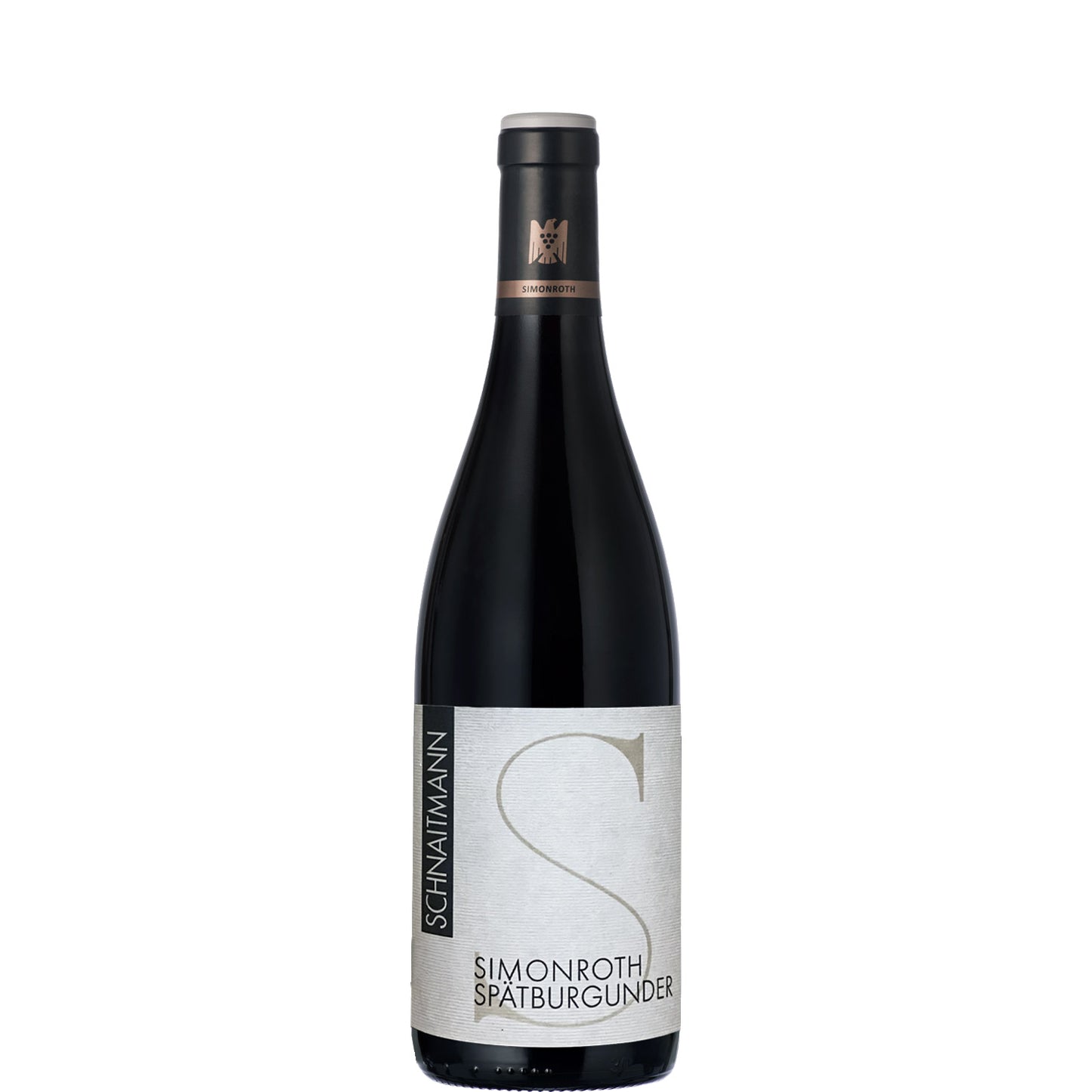
Weingut Schnaitmann, Simonroth Spätburgunder, 2015
Weingut Schnaitmann, Simonroth Spätburgunder, 2015
- Red Still
- 75CL
- 13%
- Organic
- Biodynamic
- Vegan
- Spätburgunder
Couldn't load pickup availability
Weingut Schnaitmann produces some of Württemberg's finest Spätburgunder from the prized Simonroth vineyard, where limestone-rich soils and a cool climate create wines of remarkable finesse. This 2015 vintage represents classic German Pinot Noir at its most elegant, balancing pure red fruit with earthy minerality and silky tannins.
Now drinking beautifully, this wine offers the perfect introduction to Württemberg's potential for serious red wines. The Simonroth site's limestone foundation provides the mineral backbone that sets these wines apart from warmer climate expressions, whilst careful winemaking preserves the grape's natural elegance.
This 2015 vintage has reached full maturity, with primary fruit now integrated with secondary earthy and mineral characters. The wine shows beautifully today with silky tannins and developed complexity whilst retaining freshness. Over the next few years, expect continued integration of fruit and earth, though the wine may begin to show more prominent tertiary development after 2030. German Spätburgunder from quality sites like Simonroth tends to age gracefully rather than dramatically, maintaining elegance throughout its evolution.
Tasting Notes
AppearanceMedium ruby with slight brick highlights indicating gentle development.
NoseBright red cherry and raspberry fruit dominates, supported by rose petal and violet florals. Subtle earth and limestone minerality emerges with air, along with gentle baking spice. The aromatic profile remains fresh and lifted despite the wine's maturity.
PalateMedium-bodied with silky texture and refined tannins that coat the palate without weight. Red cherry and cranberry fruit carries through from nose to palate, joined by earthy undertones and a distinctive mineral thread. The acidity provides backbone whilst remaining integrated, typical of quality German Spätburgunder.
FinishClean and persistent with lingering red fruit, subtle spice, and a chalky mineral signature from the limestone soils.
Overall impressionA textbook example of elegant German Pinot Noir that balances fruit purity with terroir expression.
Food Pairings
Württemberg's cuisine reflects its position in southwestern Germany, with hearty dishes that complement the region's red wines perfectly. Local specialities include Sauerbraten (marinated roast beef), Maultaschen (large pasta parcels filled with meat and spinach), and various game dishes during autumn. The region's Spätburgunder traditionally accompanies roasted pork, venison stew, and local sausages like Bratwurst. Mushroom dishes featuring local varieties pair beautifully with the earthy character these limestone sites impart to the wines.
We think this wine would go well with
Serve at 16-18°C in large Burgundy bowls to allow the delicate aromatics to develop fully. Decanting is unnecessary for this mature vintage, though opening an hour before serving allows the wine to show its full complexity. The wine's elegance suits smaller glasses that concentrate the subtle perfume rather than oversized bowls that might dissipate the aromatics.
The Simonroth vineyard sits on limestone-dominated soils with excellent drainage and south-facing exposure. Located in the Remstal valley, the site benefits from Württemberg's continental climate with warm days and cool nights during the growing season. These limestone soils impart a distinctive mineral character to the wines whilst the elevation provides the freshness essential for elegant Spätburgunder. The combination of soil structure and microclimate allows for extended hang time without losing acidity.
Württemberg produces more red wine than any other German region, yet remains relatively unknown outside Germany itself. The region's warm climate and diverse soils favour varieties like Spätburgunder, Lemberger, and Trollinger. Unlike other German regions focused on Riesling, Württemberg's identity centres on red wine production, with many estates achieving remarkable quality from limestone and keuper clay sites. The region's continental climate provides the warmth needed for red grape ripening whilst maintaining the acidity that defines German wine character.
The 2015 growing season in Württemberg benefited from a warm, dry summer that allowed grapes to ripen steadily across the region's scattered vineyard sites. While much of Germany experienced challenging conditions that year, Württemberg's protected valleys and south-facing slopes provided favourable microclimates that helped maintain balance in the fruit. The harvest proceeded without major weather disruptions, allowing growers to pick at optimal ripeness levels across both red and white varieties.
This vintage produced wines with good concentration and typical Württemberg character, though it lacks the exceptional quality that defines the region's most celebrated years. Trollinger showed its characteristic bright fruit and easy drinkability, while Lemberger developed decent structure and colour intensity. The Rieslings display clean, mineral-driven profiles with moderate acidity. Most 2015 Württemberg wines are drinking well now and should be enjoyed over the next few years, as they were crafted in a style that favours earlier consumption rather than extended cellaring.
FAQs
How does German Spätburgunder compare to Burgundy?
German Spätburgunder tends to show more restraint and mineral character than most Burgundy, with typically higher acidity and more delicate fruit expression. The limestone soils of sites like Simonroth create wines with similar mineral backbone to Burgundy but with a distinctly German sense of precision and elegance.
Why is Württemberg relatively unknown for red wine?
Württemberg produces more red wine than white, unlike most German regions, but much of the production is consumed locally. The region's focus on red varieties like Spätburgunder and Lemberger creates wines quite different from the Riesling-dominated German wine image, leading to limited international recognition despite excellent quality.
What makes the Simonroth vineyard special?
Simonroth benefits from limestone-rich soils that provide excellent drainage and mineral character, combined with ideal south-facing exposure in the Remstal valley. The site's elevation and limestone foundation create ideal conditions for Spätburgunder, producing wines with distinctive mineral backbone and natural elegance.
How should I store this wine?
Store horizontally in a cool, dark place at 12-15°C with consistent humidity. This 2015 vintage is drinking perfectly now but will continue to develop gracefully for another 5-6 years. German Spätburgunder from quality sites like Simonroth ages more slowly than many reds, maintaining freshness whilst gaining complexity.
What food pairings work best with this style?
The wine's elegance and acidity suit roasted poultry, pork tenderloin, and mushroom-based dishes particularly well. Local German cuisine like Sauerbraten or game dishes provide classic pairings, whilst the mineral character complements earthy preparations and root vegetables beautifully.
Is this wine representative of German Spätburgunder?
This wine exemplifies the best qualities of German Spätburgunder: elegance over power, mineral precision over fruit weight, and natural acidity providing backbone. Schnaitmann's approach represents the modern German style that balances traditional restraint with contemporary winemaking precision.
-
Free UK Delivery
Learn about deliveryGet free UK delivery when you spend £75 or more on duty paid wine
-
Save 30% on a host of quality wines
Our fine wines are sourced from our sister retailers, but offered at a substantial discount to their previous selling prices.