

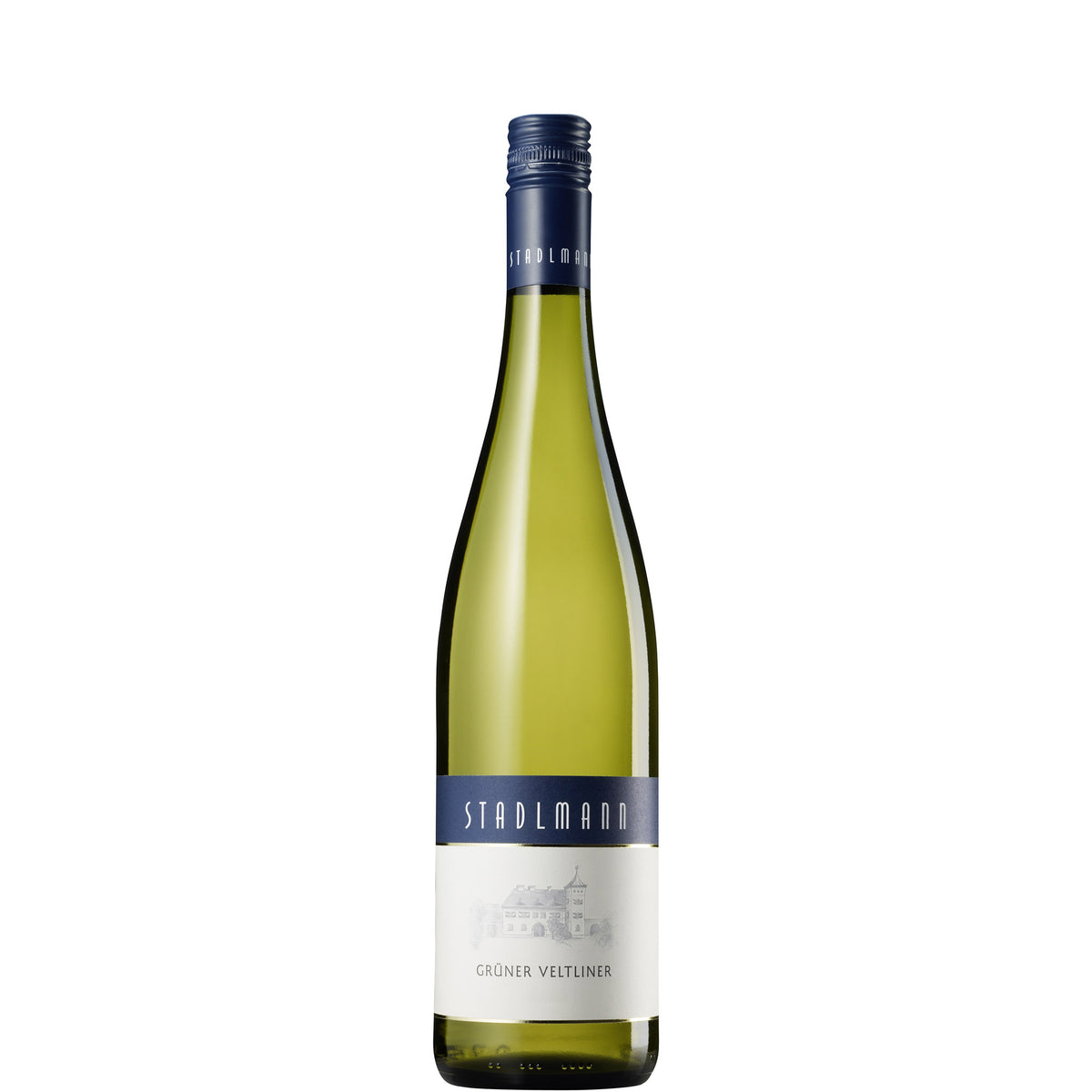
Weingut Stadlmann, Grüner Veltliner, 2022
Weingut Stadlmann, Grüner Veltliner, 2022
- White Still
- 75CL
- 12.5%
- Organic
- Grüner Veltliner
Couldn't load pickup availability
Weingut Stadlmann is one of the most respected names in Thermenregion, a small Austrian wine region just south of Vienna better known historically for Rotgipfler and Zierfandler than for Grüner Veltliner. This 2022 bottling shows the variety in its most invigorating form: dry, taut and peppery, built on the limestone-flecked soils of the Rohrer Berg vineyard. Fermented and aged in stainless steel to preserve freshness, it is a wine of precision rather than weight.
Expect green apple, lime zest and that characteristic white pepper spike on the nose, with a mineral, almost saline thread running through the palate. Drink with a chill and a simple plate of food that lets its energy speak for itself.
This is a wine built for early drinking, with its primary green apple and citrus fruit at their most vivid now until around 2028. The characteristic white pepper note may soften slightly with another year or two in bottle, gaining a touch of honeyed roundness without losing its mineral spine.
Tasting Notes
AppearancePale lemon-green with a bright, youthful rim.
NoseGreen apple and lime zest lead, with a distinct white pepper spike and a faint note of fresh garden herbs. There's a chalky, mineral undertone beneath the fruit.
PalateDry and taut, with crisp citrus and orchard fruit carried on racy acidity. A peppery, savoury edge builds through the mid-palate, backed by a saline, stony texture.
FinishClean, dry and zesty, with the white pepper note lingering longest.
Overall impressionA precise, energetic Grüner Veltliner that delivers more tension than weight.
Food Pairings
Around Baden and the Thermenregion, Grüner Veltliner is poured alongside Wiener Schnitzel, roast chicken and the region's beloved asparagus dishes in spring. Locals also reach for it with Liptauer, a spiced curd cheese spread, and with simple grilled river fish from the nearby Danube tributaries. Its peppery lift makes it a natural match for dishes seasoned with caraway, horseradish or mustard, staples of Austrian home cooking.
We think this wine would go well with
Serve chilled at 8-10°C. No decanting is necessary given its youthful, fresh style. A tulip-shaped white wine glass will concentrate the citrus and pepper aromatics nicely.
The Rohrer Berg and surrounding sites sit on a mix of limestone, loam and gravel, with vineyards rising to around 300 metres and benefiting from cooling breezes off the nearby Vienna Woods. The Thermenregion's warm days and cool nights, moderated by its proximity to the Alps, allow Grüner Veltliner to ripen fully while retaining the acidity and peppery lift that define the variety. Limestone in particular lends the wine its mineral backbone.
Thermenregion lies just south of Vienna and takes its name from the thermal springs around Baden, historically prized more for Zierfandler and Rotgipfler than for Grüner Veltliner, which is nonetheless widely planted. There is no single restrictive appellation style here; producers like Stadlmann bottle site-specific wines that range from everyday drinking to serious, ageworthy expressions. Compared to the Kamptal or Wachau, Thermenregion Grüner Veltliner tends to be slightly riper and rounder, though Stadlmann's version keeps things lean and precise.
Thermenregion enjoyed a warm, generally dry growing season in 2022, continuing the pattern of recent vintages in this sheltered corner south of Vienna. A mild spring gave way to a hot summer with limited rainfall, pushing harvest forward and concentrating sugars in both Zierfandler and Rotgipfler, the two indigenous white varieties that make this region so distinctive. Growers with older vines and access to the cooler slopes towards the Vienna Woods fared particularly well, retaining the acidity needed to balance the ripeness. Some parcels saw stress from the dry conditions, but overall the fruit came in healthy and clean, with no significant disease pressure to contend with.
Quality across the region is strong, with Zierfandler showing its characteristic spice and weight, and Rotgipfler delivering the textured, almost waxy richness that collectors prize. Reds from Thermenregion, chiefly Sankt Laurent and Pinot Noir, also benefited from the warmth, producing supple, perfumed wines with good ripeness of tannin. This is a vintage that rewards patience with the top whites, which have the structure to develop further over the next three to five years, though the reds are approachable now and will continue to drink well into the medium term.
FAQs
What food pairs best with this Grüner Veltliner?
Its peppery, mineral character suits roast chicken, Wiener Schnitzel, asparagus dishes and lighter seafood such as grilled sea bream or smoked mackerel.
How long can I cellar this wine?
It is best enjoyed between 2026 and 2031. This is a fresh, early-drinking style rather than one built for long-term ageing.
What makes Thermenregion different from the Wachau or Kamptal for Grüner Veltliner?
Thermenregion is traditionally known for Zierfandler and Rotgipfler, so its Grüner Veltliner tends to be slightly riper and rounder than the leaner, more mineral styles of the Wachau, though Stadlmann keeps this example notably precise.
Should I decant this wine?
No, decanting is unnecessary. Serve it chilled straight from the bottle to preserve its freshness and aromatic lift.
Is this a serious, investment-grade bottle or an everyday drinker?
This is a high-quality, precisely made wine for near-term enjoyment rather than long-term investment or speculative cellaring.
What glassware shows this wine best?
A standard tulip-shaped white wine glass will concentrate the citrus and white pepper aromatics effectively.
-
Free UK Delivery
Learn about deliveryGet free UK delivery when you spend £75 or more on duty paid wine
-
Save 30% on a host of quality wines
Our fine wines are sourced from our sister retailers, but offered at a substantial discount to their previous selling prices.